Environmental Sustainability
Performances
Management Approaches
Water Resource Management
Water Usage and Recycling
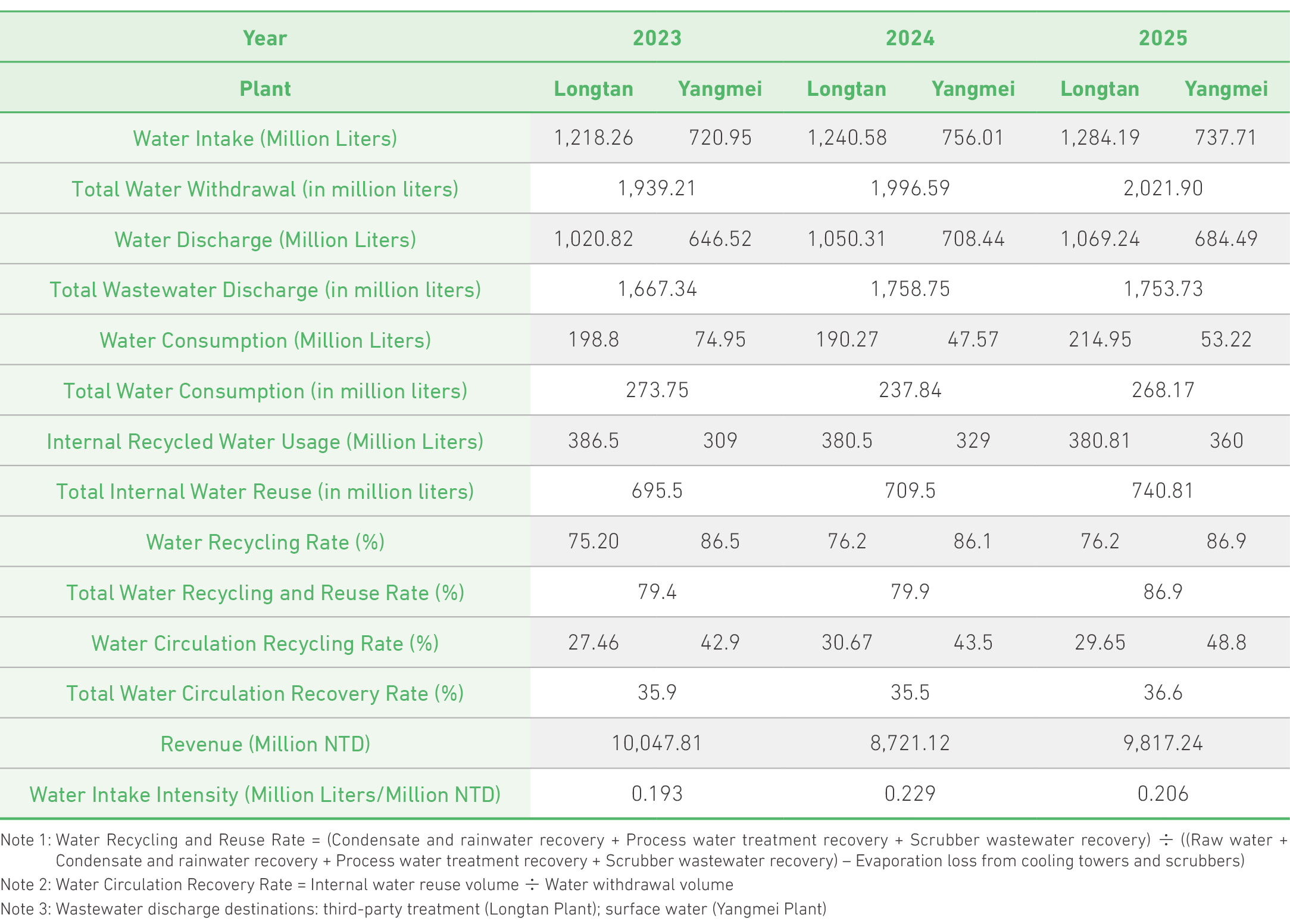
Wafer Works' water intake has had minimal impact on the local area. Both the Yangmei and Longtan fabs are situated in Taoyuan City. According to the World Resources Institute's "Aqueduct Water Risk Atlas," the areas where Wafer Works operates face a medium to low risk of water resource stress. The Longtan fab draws water from third-party providers (tap water) and utilizes surface water collected from rainwater. This water undergoes sedimentation in settling tanks before being recycled for various purposes. Similarly, the Yangmei fab obtains water from third-party providers (tap water) and licensed underground wells. During the establishment and expansion of our facilities, we had consistently submitted water usage plans, which had been approved by the relevant regulatory authorities. These plans were then evaluated by the Taiwan Water Corporation Second Branch to ensure they meet the required water demand. The water source is drawn from the Shihmen Reservoir, which provided an average water supply of 394,121,832 tonnes annually from 2020 to 2024. According to the 2024 Taiwan Water Corporation Annual Statistics Report, the total water output from the Second District Management Office was 381,680,238 metric tons. In 2025, the Company's total water withdrawal amounted to 2,021,907 metric tons (737,713 tons + 1,284,194 tons), accounting for 0.51% of the total water withdrawal, indicating no significant impact on local water resources.
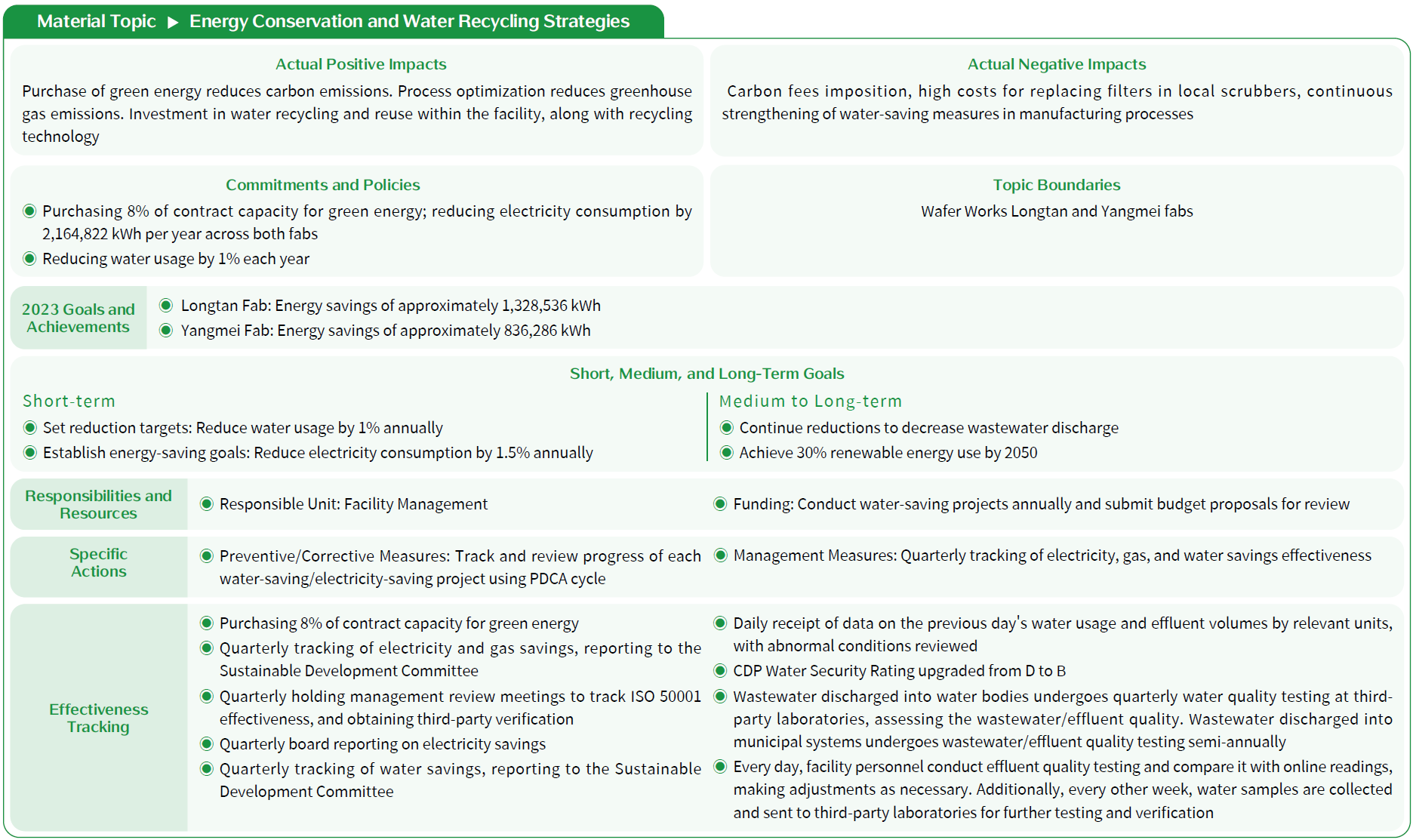
The water resource management program is implemented based on three strategies: reduction, reuse, and recycling. Measures include the installation of a Local Scrubber water recycling system and the reuse of discharged water recovered from the Local Scrubber recycling system.
Effluent Discgarge
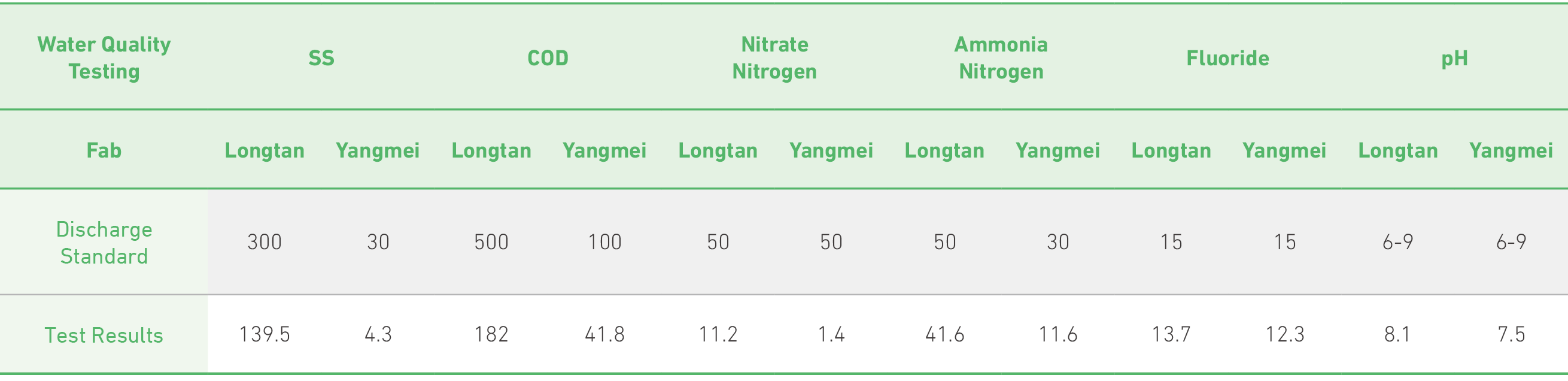
Wafer Works treats all wastewater through proper sewage facilities, ensuring that effluent quality meets the regulatory discharge standards. Regular testing is performed to ensure that the effluent does not significantly impact nearby water bodies. Moreover, Wafer Works has a monitoring and data acquisition system in place to oversee various indices during the wastewater treatment process, including Chemical Oxygen Demand (COD), Suspended Solids (SS), fluoride concentration (F-), and pH levels. This system allows for immediate action in case of any malfunction, preventing environmental contamination. If abnormal water quality is detected, the monitoring system promptly alerts on-duty personnel to take appropriate measures to prevent violations and environmental pollution. Since its inception, Wafer Works has placed a premium on water pollution prevention and water resource management. We continue to promote water recycling initiatives annually, striving to reduce water consumption and protect water resources.
During the reporting period, Wafer Works' water intake was 737.71 million liters for the Yangmei fab and 1,284.19 million liters for the Longtan fab. The total wastewater produced was 684.49 million liters for the Yangmei fab and 1,069.25 million liters for the Longtan fab.
The monitored values of water intake and discharge for Wafer Works' Longtan and Yangmei fabs during the reporting period are as follows:
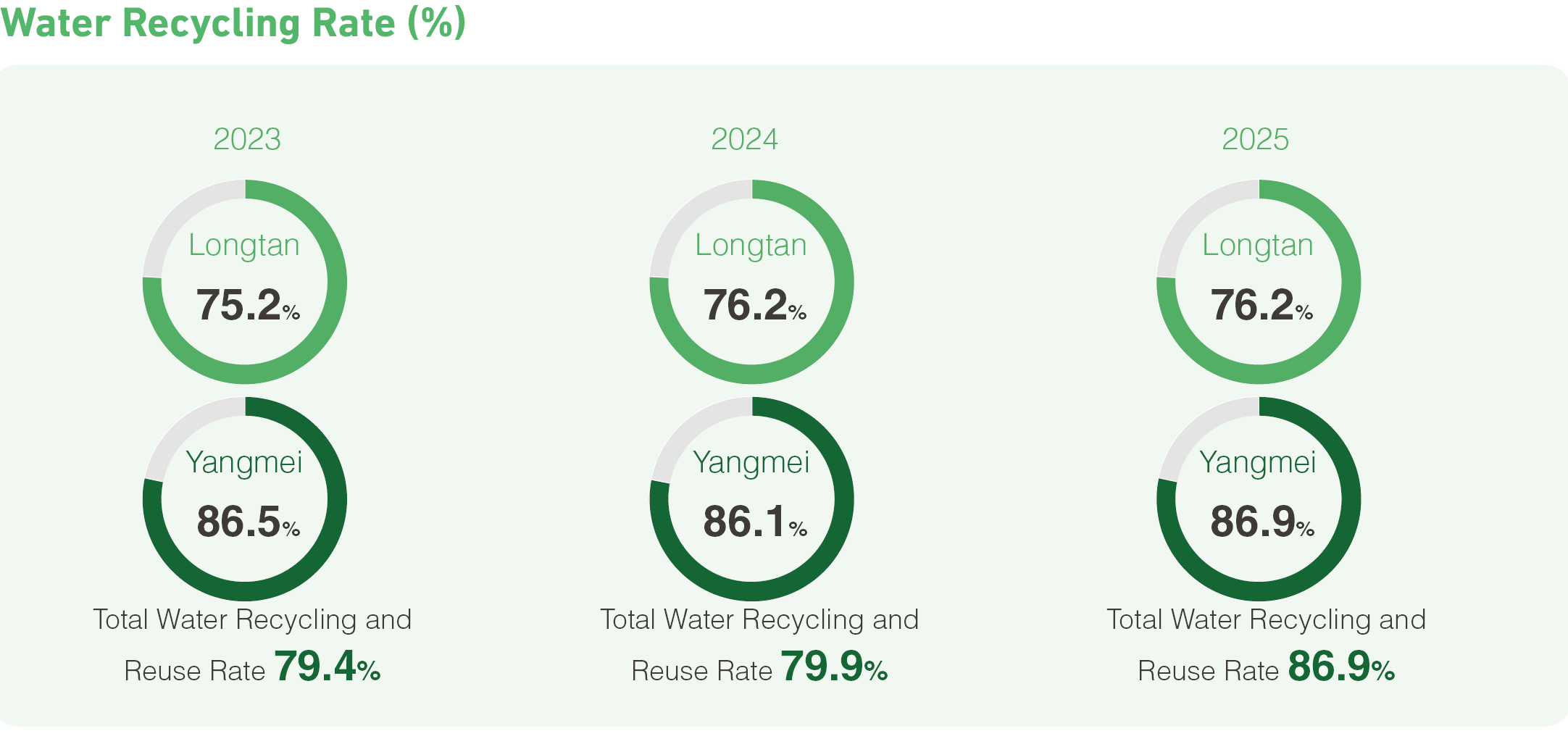
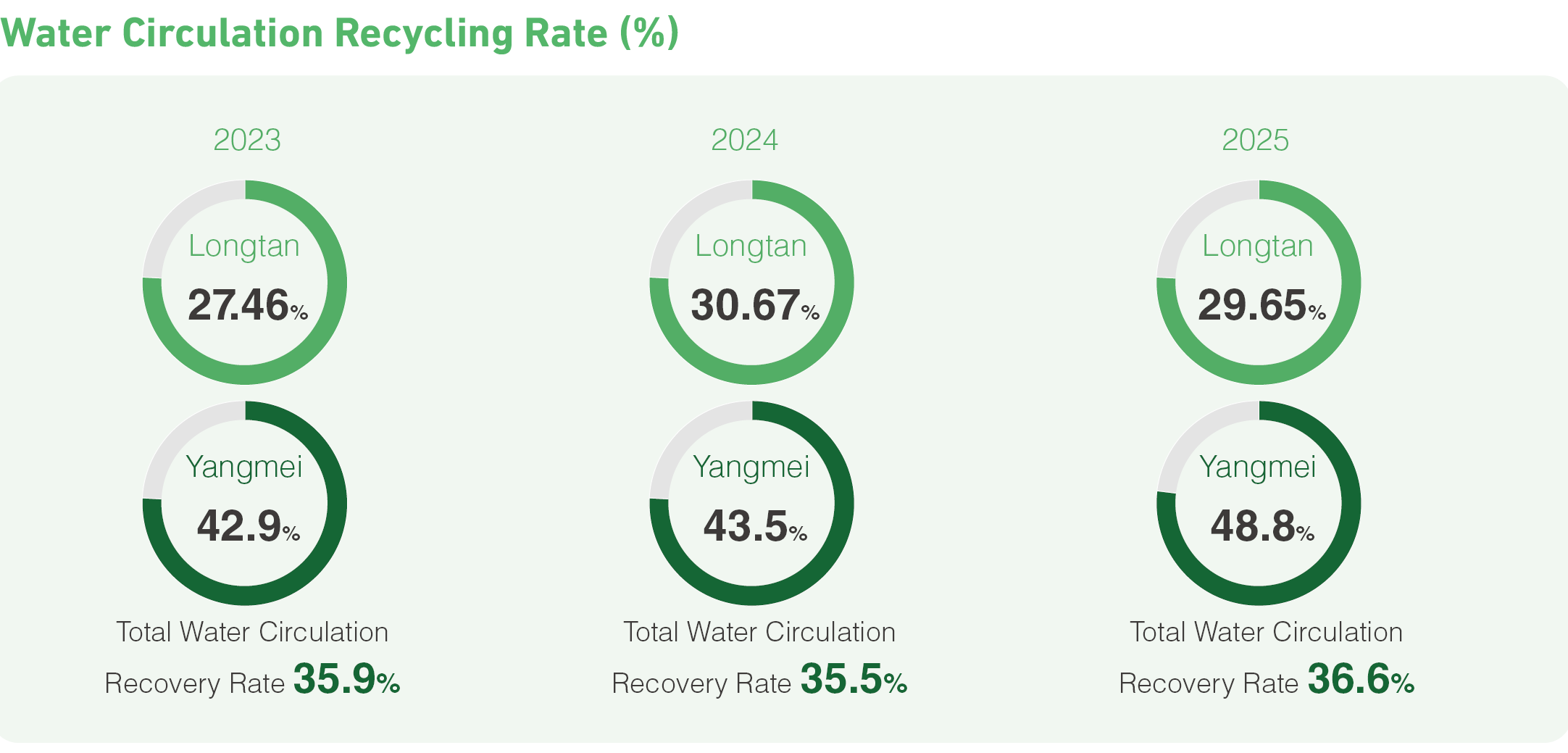
Water Recycling Rate
Water Circulation Recycling Rate
Energy Management
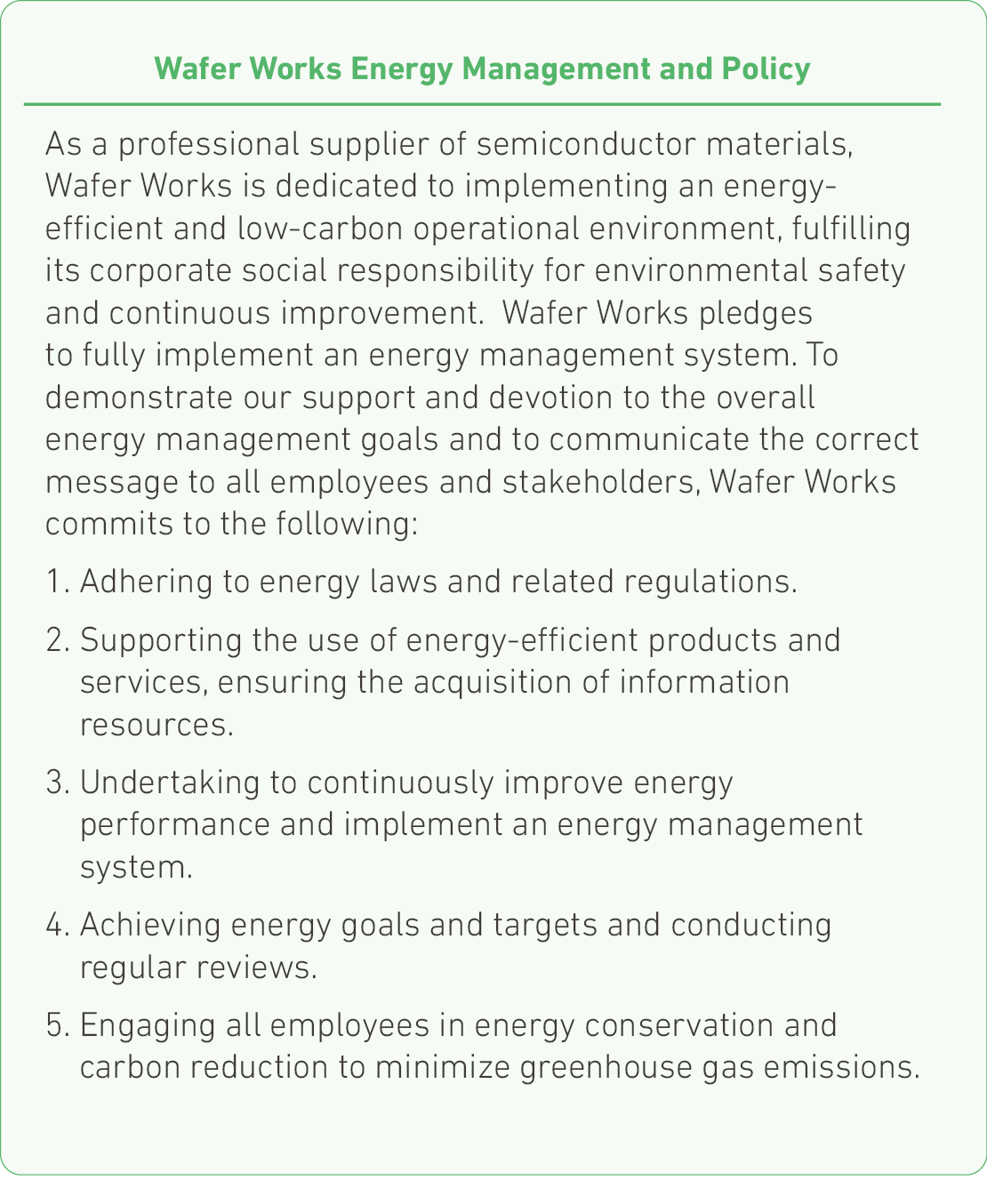
Energy Management and Policy
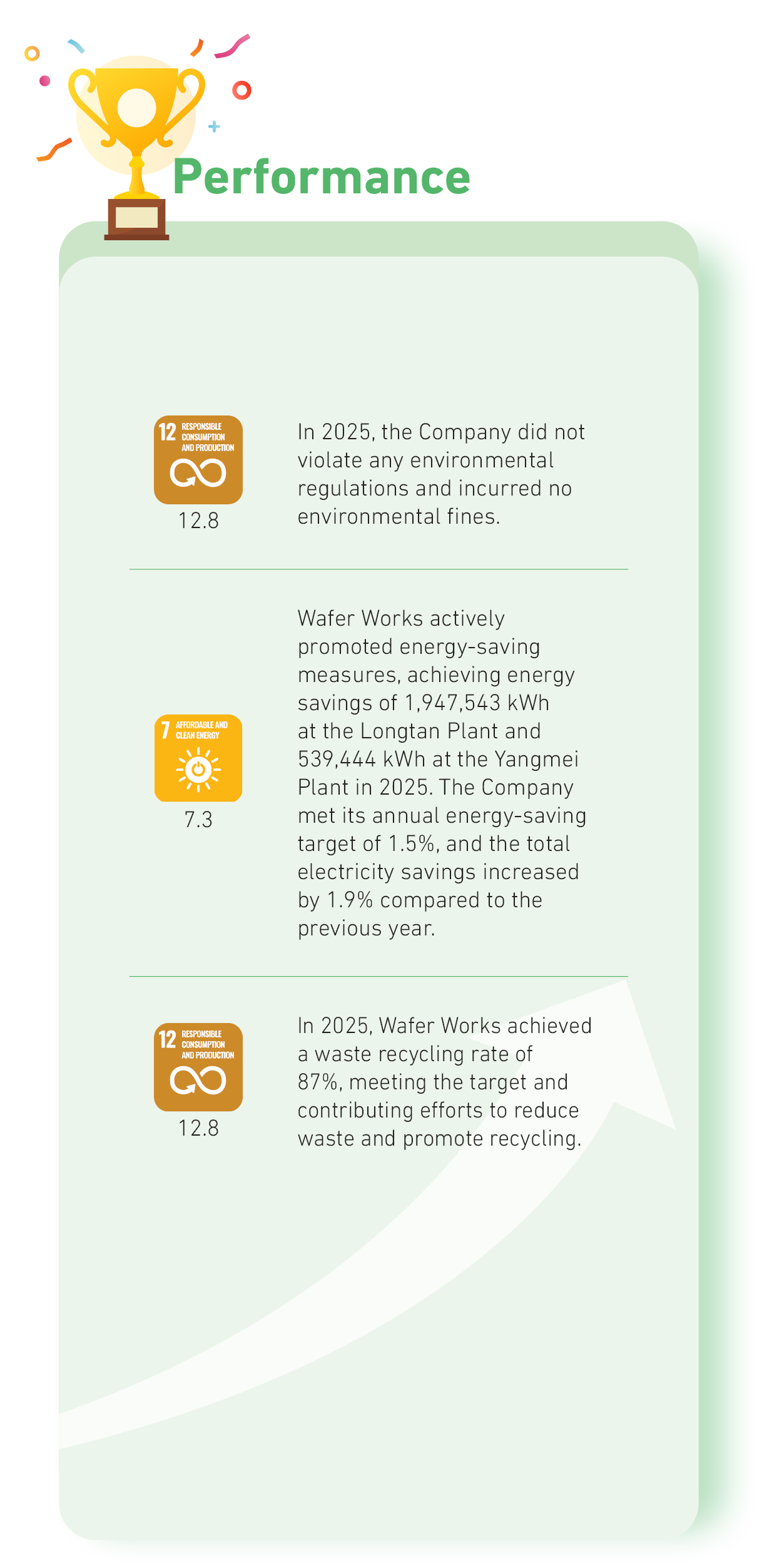
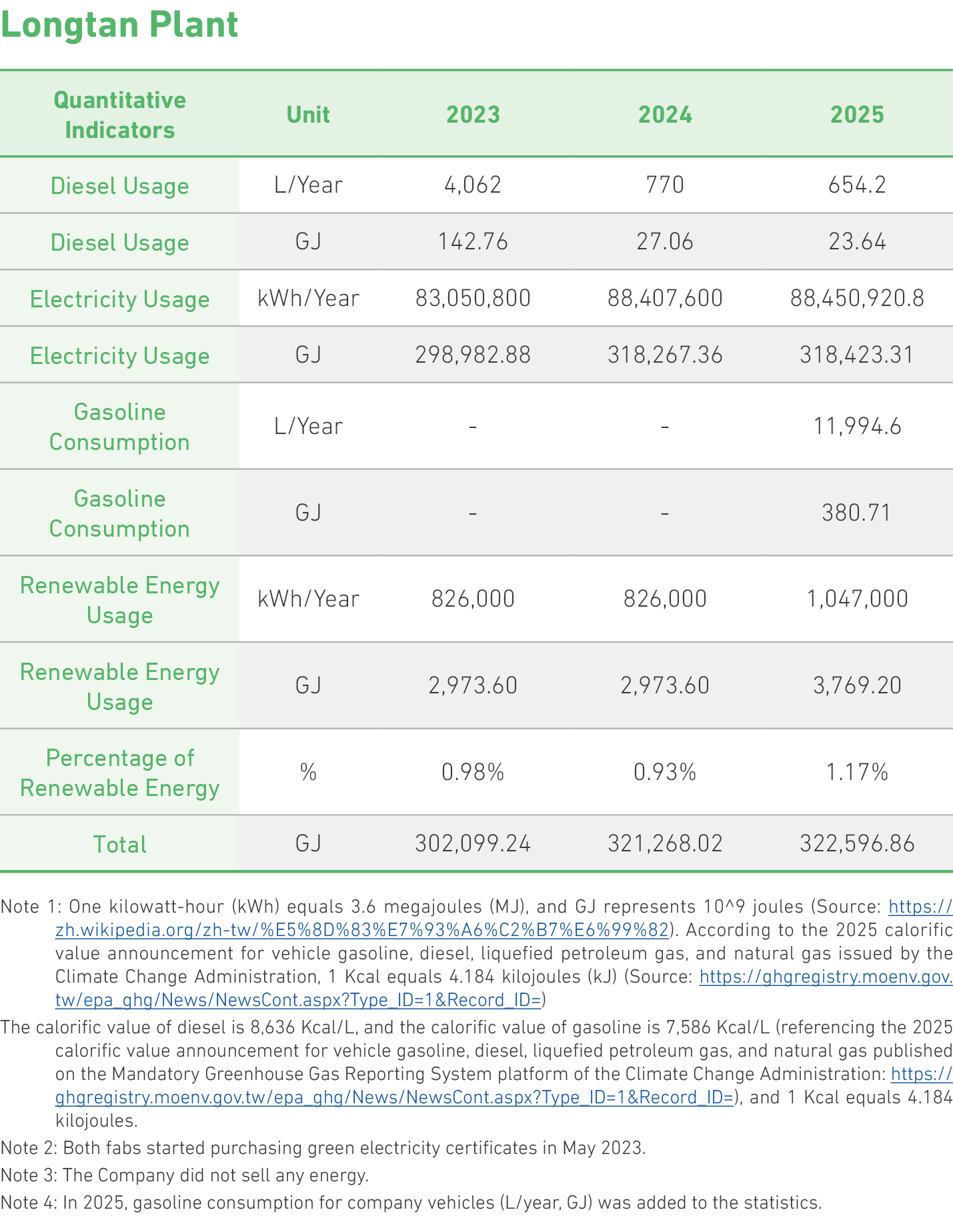
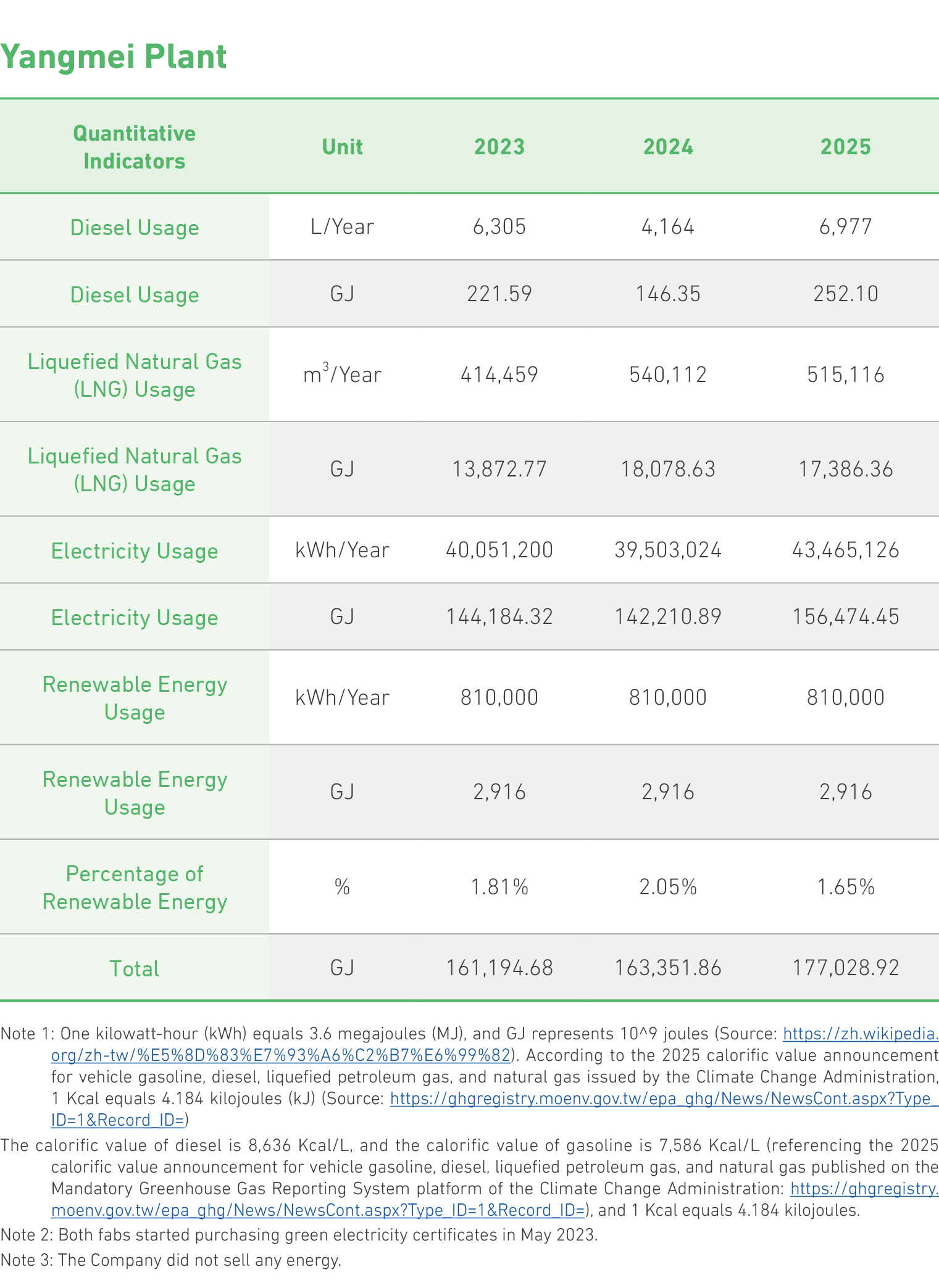
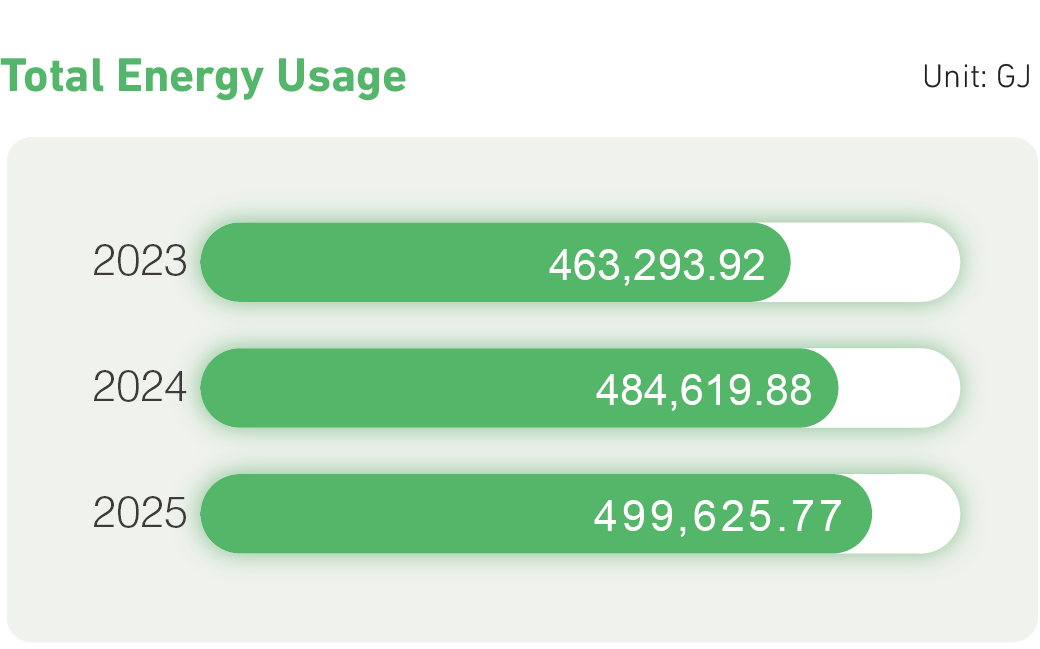
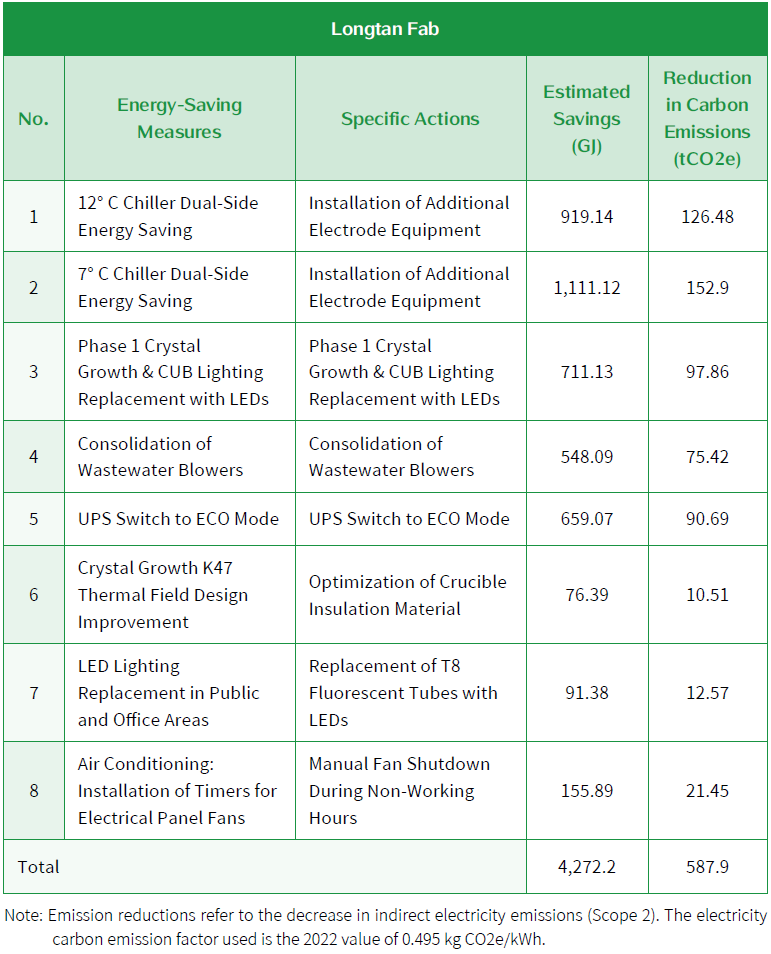
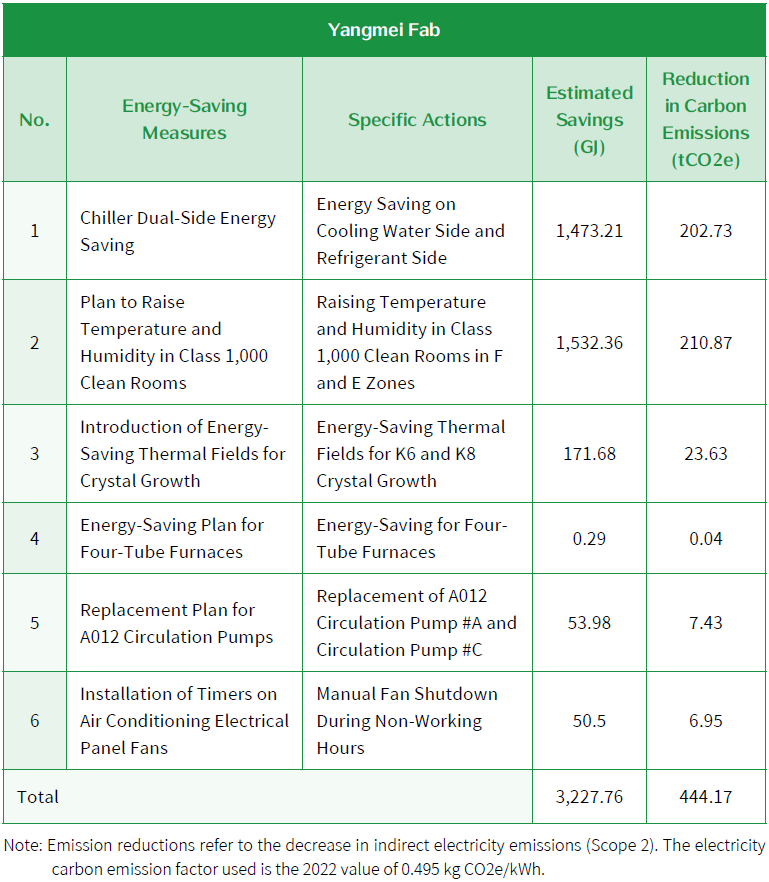
The energy usage of Wafer Works' Longtan Plant during the reporting period is shown in the table below. In 2025, the Longtan Plant saved 1,947,543 kWh of electricity, reducing energy usage by 7,011.2 GJ with an energy-saving rate of 2.2%. In the same year, the Yangmei Plant saved 539,444 kWh, reducing energy usage by 1,942 GJ, with an energy-saving rate of 1.2%.
 |
 |
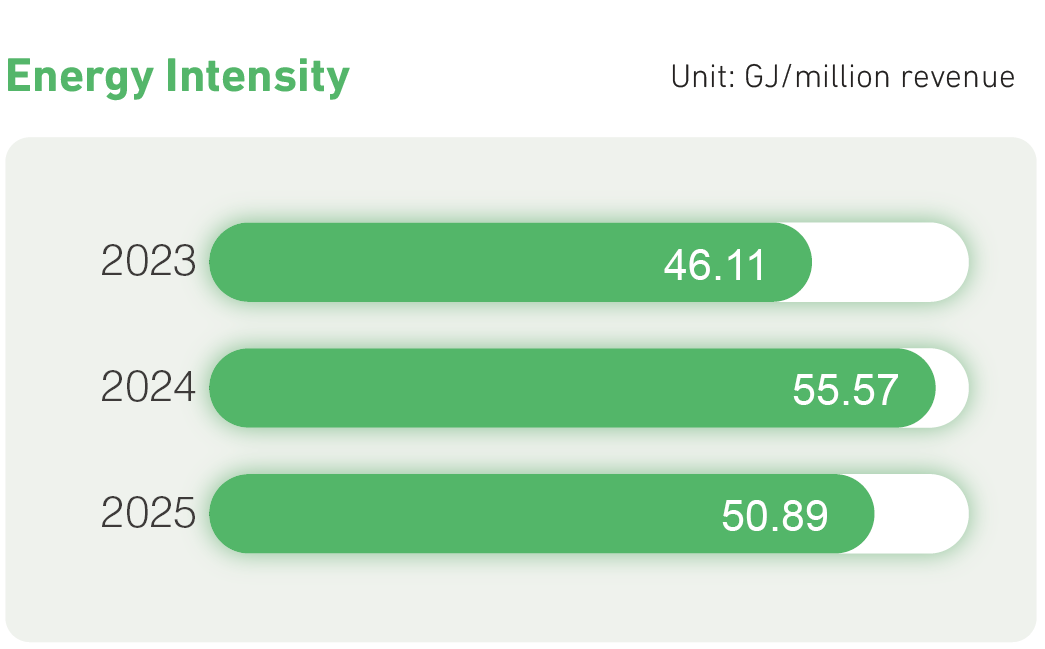
Energy Intensity
 |
 |
Energy Saving Achievements
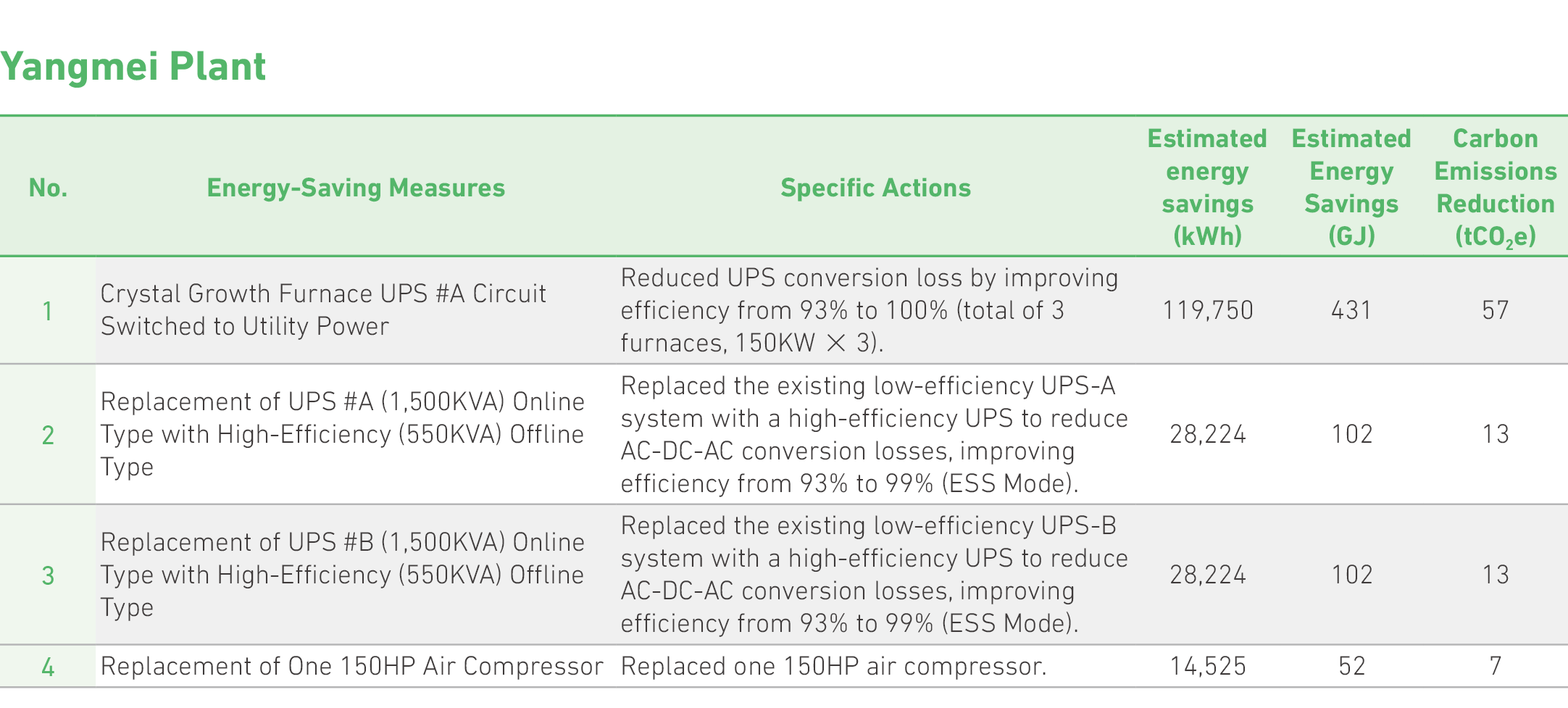
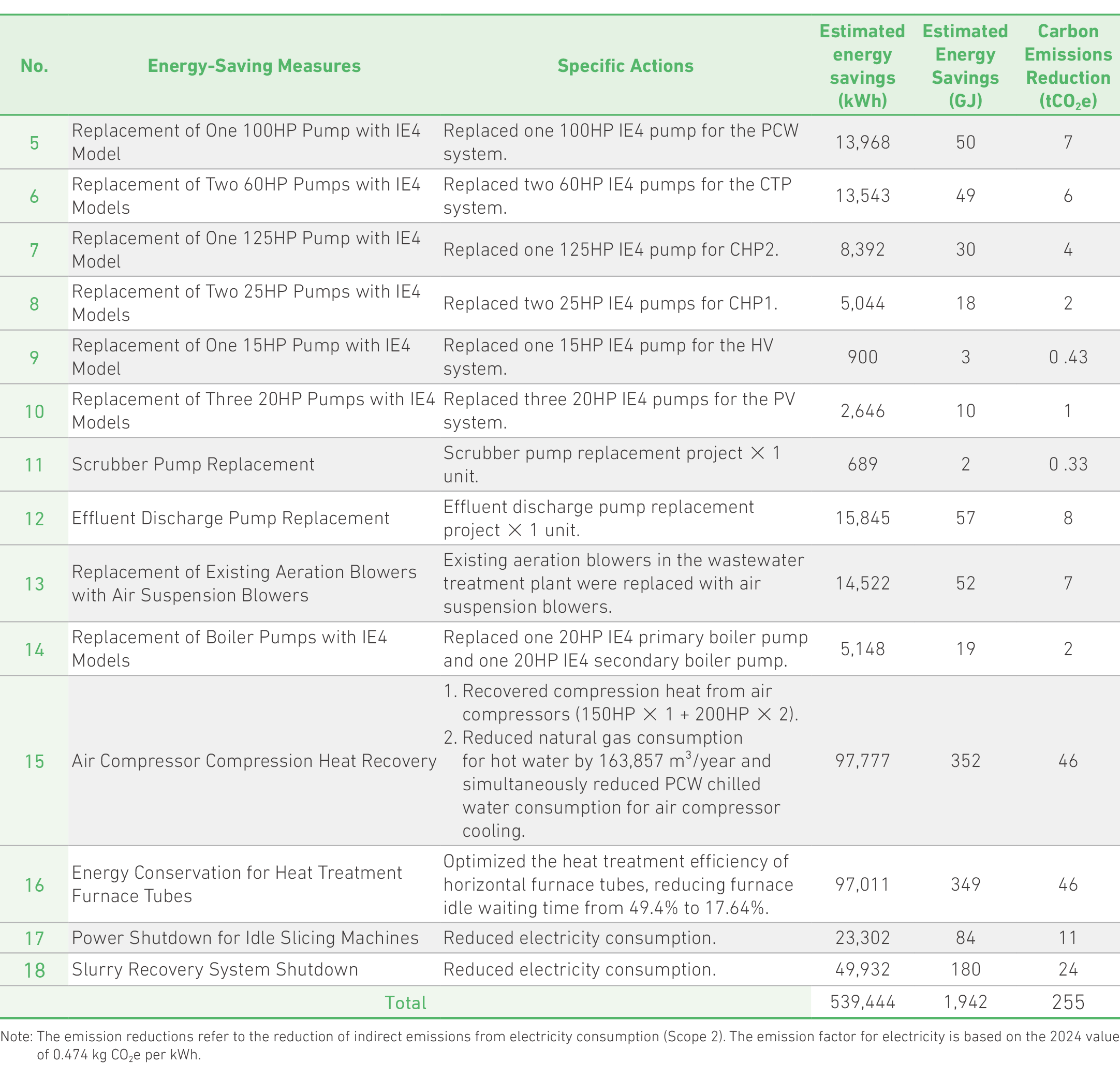
Climate Change and Carbon Emissions
Climate Change Response
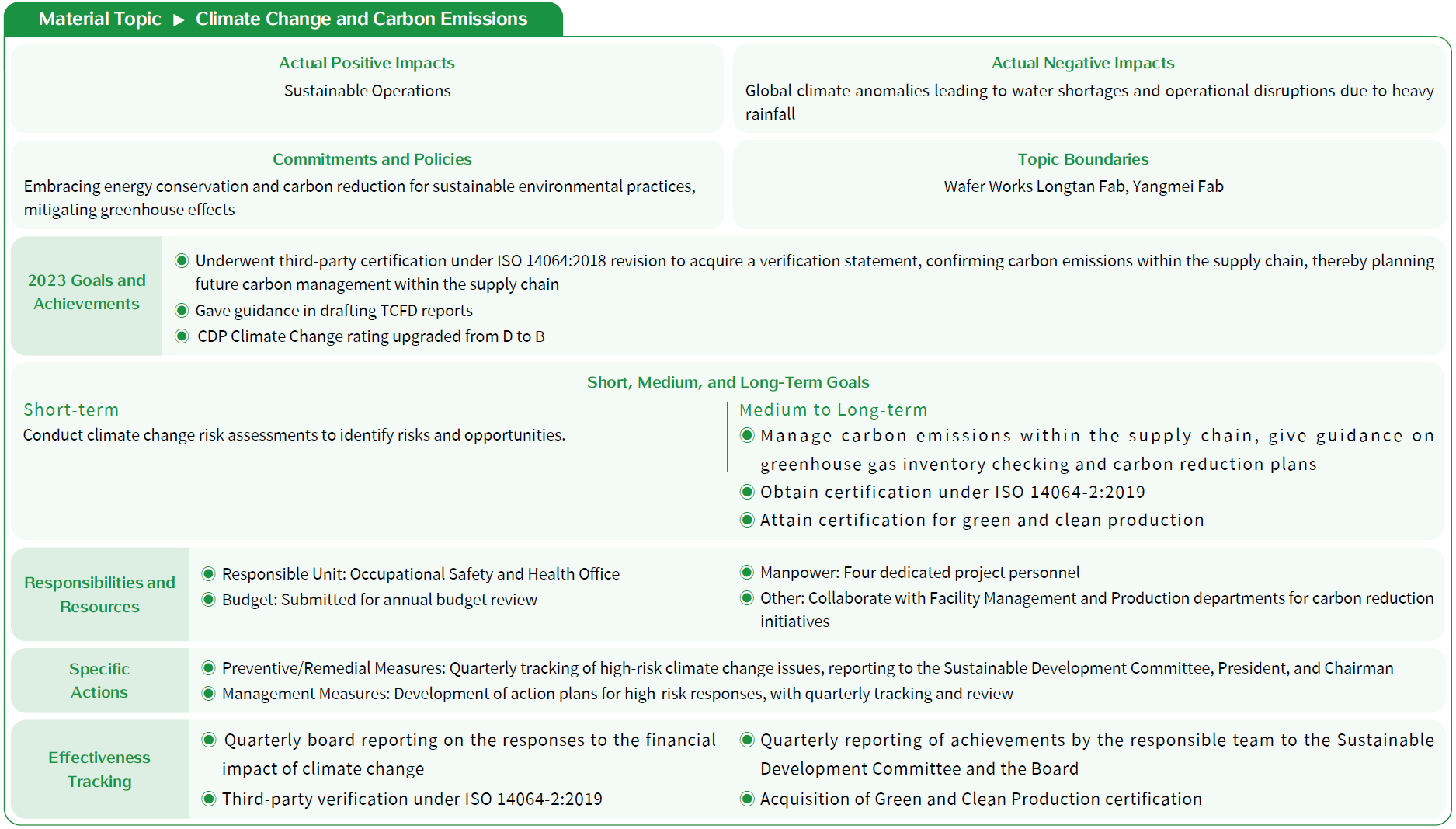
Wafer Works has established internal control and audit systems, as well as risk management measures. Due to global warming leading to extreme weather events and the rising awareness of environmental conservation, energy efficiency, safety, and health, the Company has striven to fulfill its corporate social responsibility to establish a foothold in the industry.
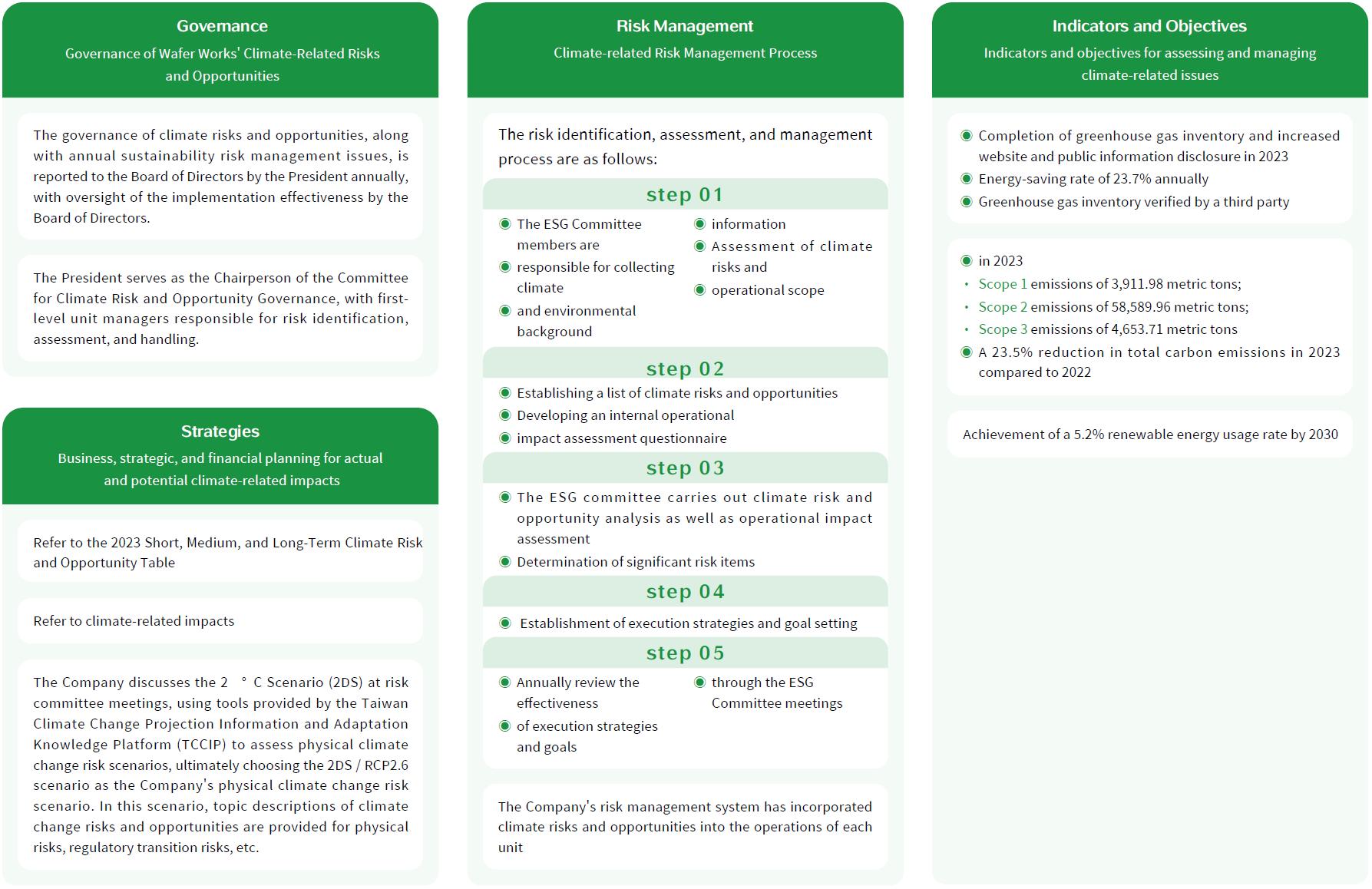
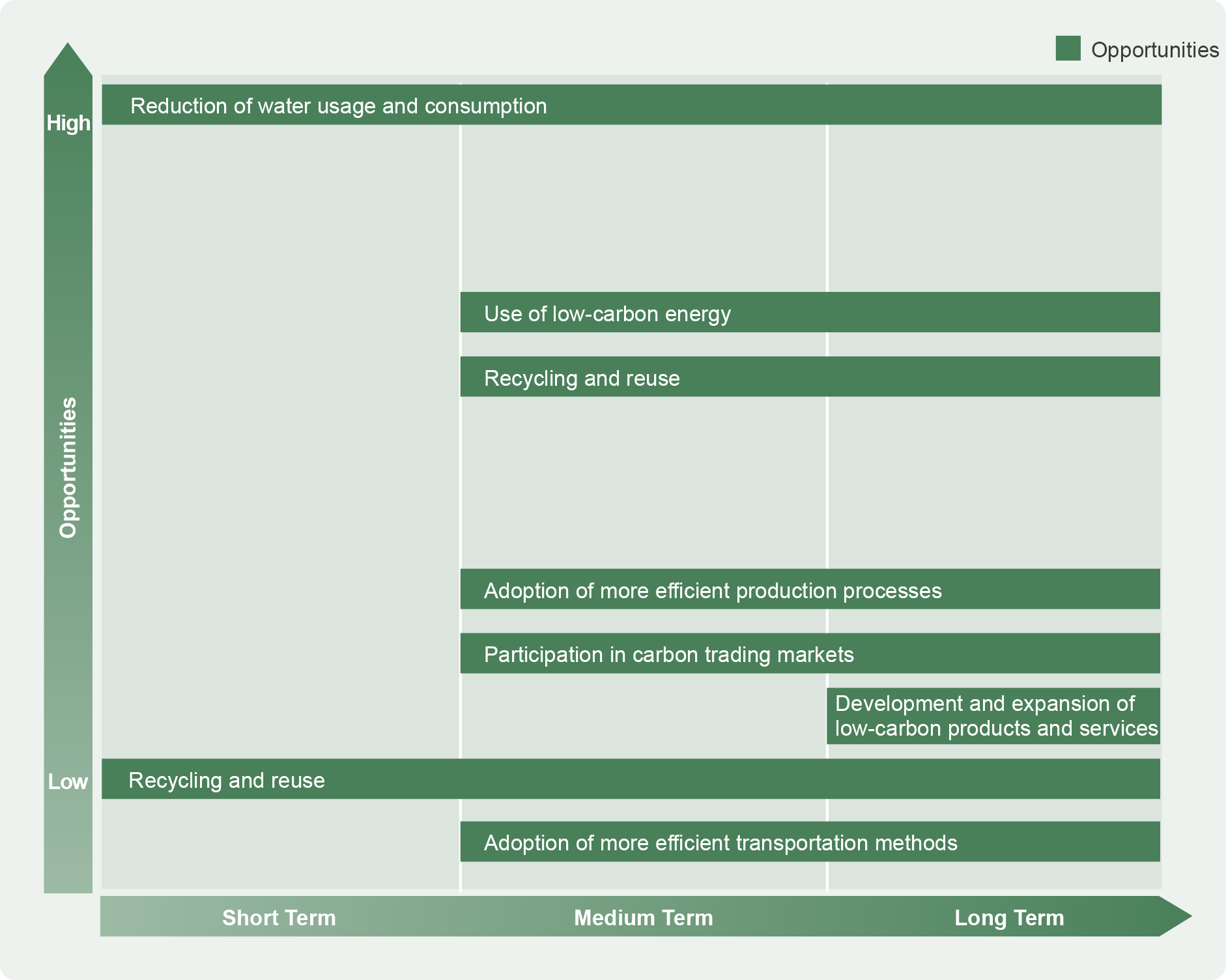
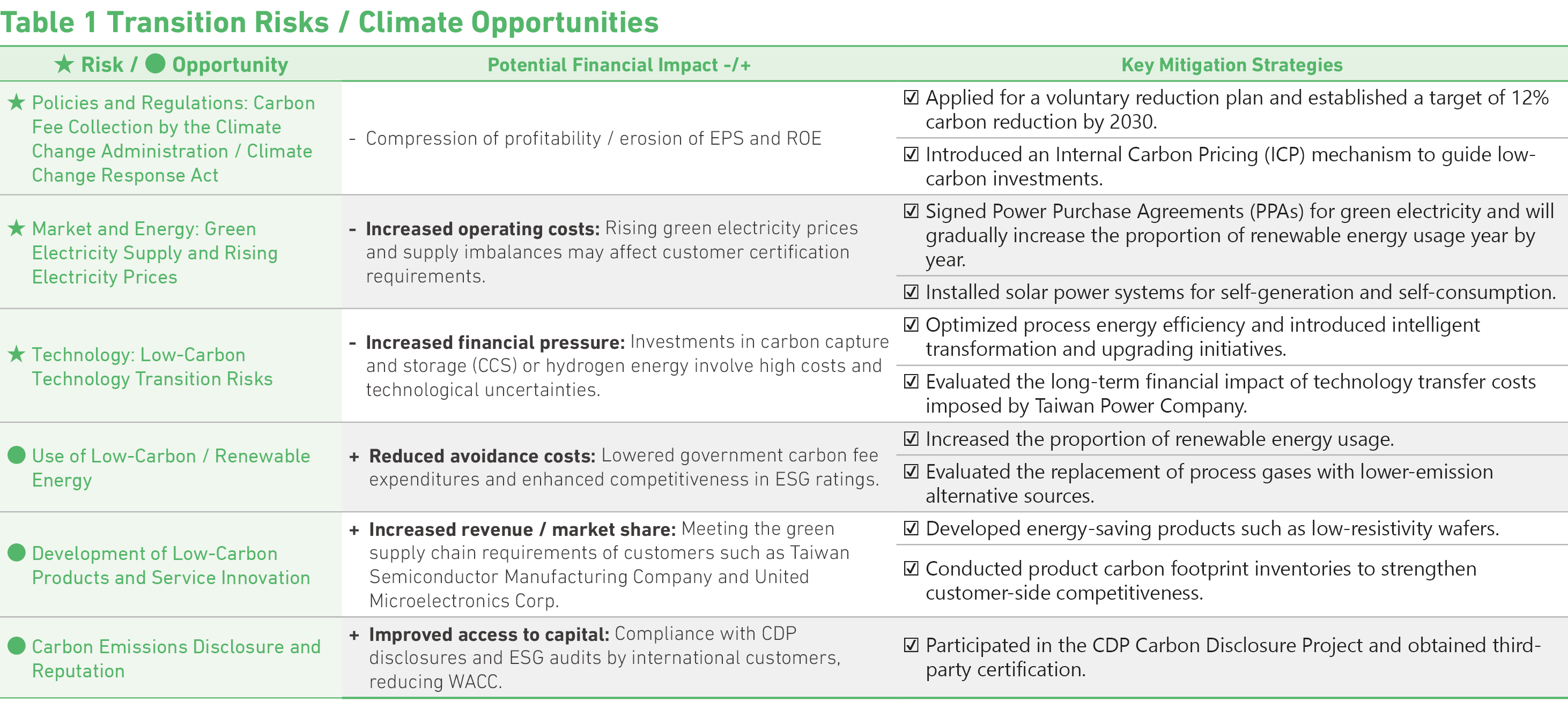
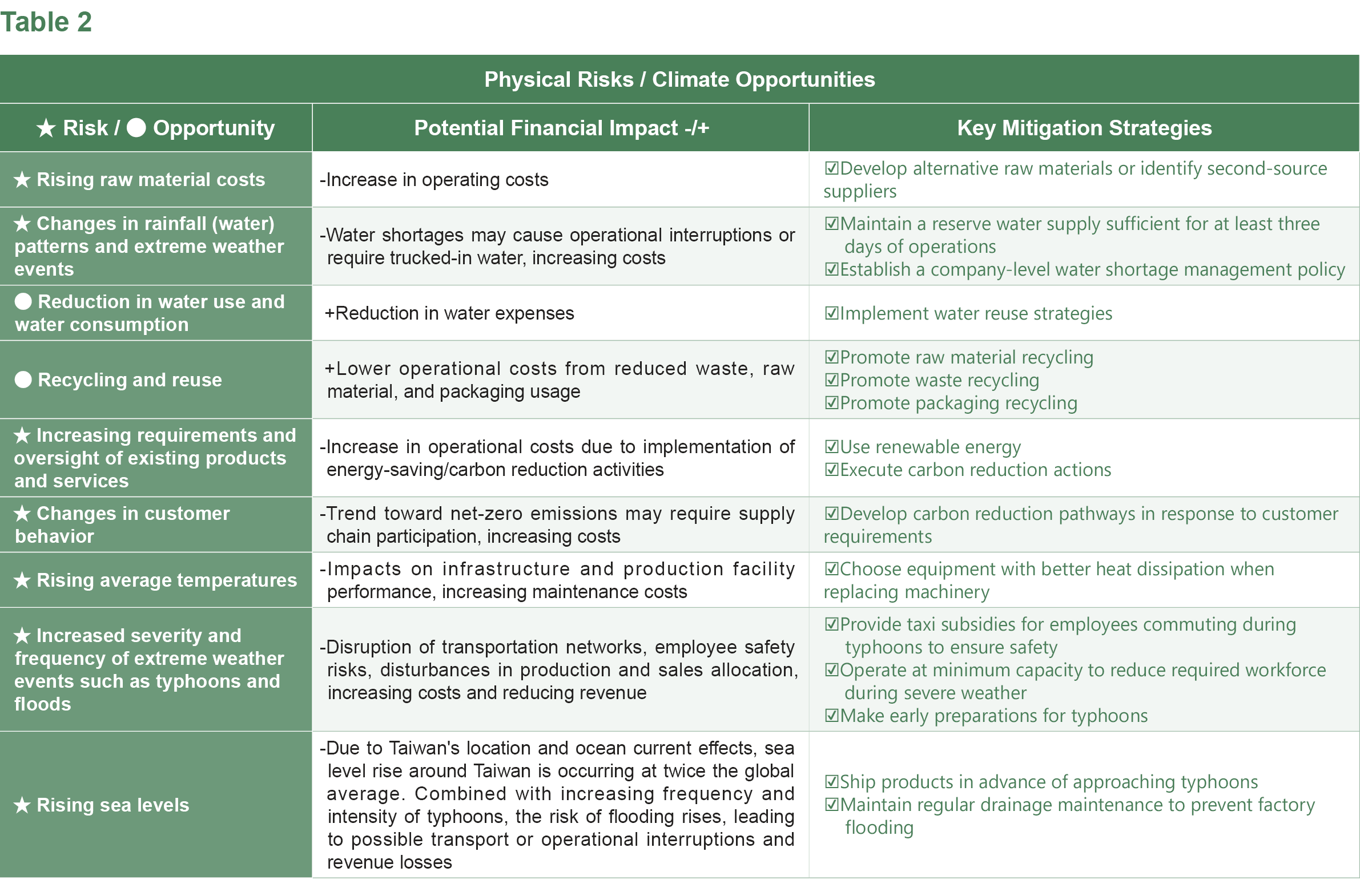
Following the framework of the Task Force on Climate-related Financial Disclosures (TCFD), Wafer Works' response can be categorized into governance, strategy, risk management, indicators, and targets. Sustainable Development Committee members identify climate-related risks and opportunities, formulate response strategies, and report to the Board of Directors annually. The Board of Directors oversees the effectiveness of implementation.
Risk Strategy: Climate Change Opportunities and Risk Matrix Analysis (Short-, Medium-, and Long-Term)
 |
 |
Climate-related Impacts
  |
Greenhouse Gas Management
Greenhouse Gas Management
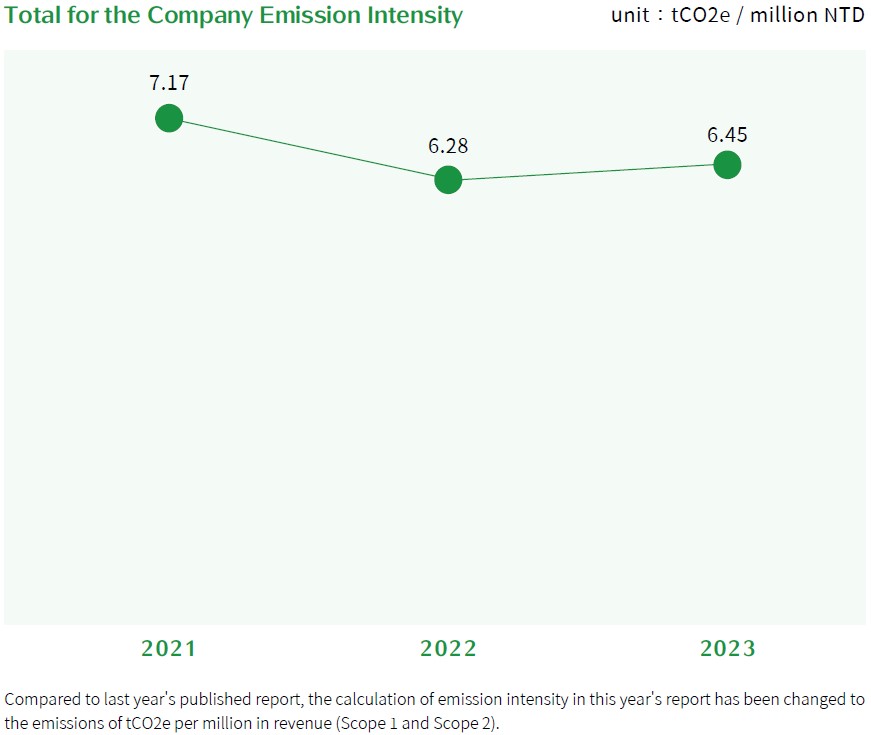
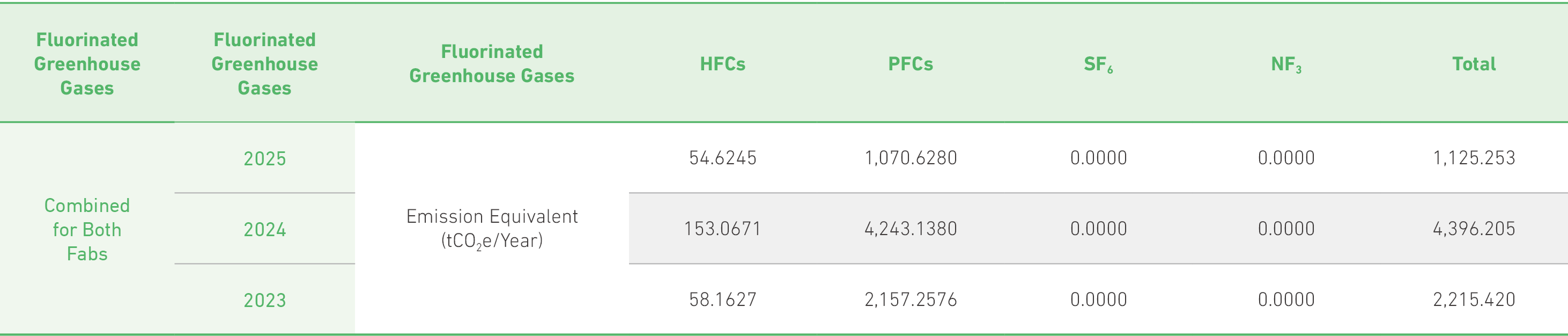
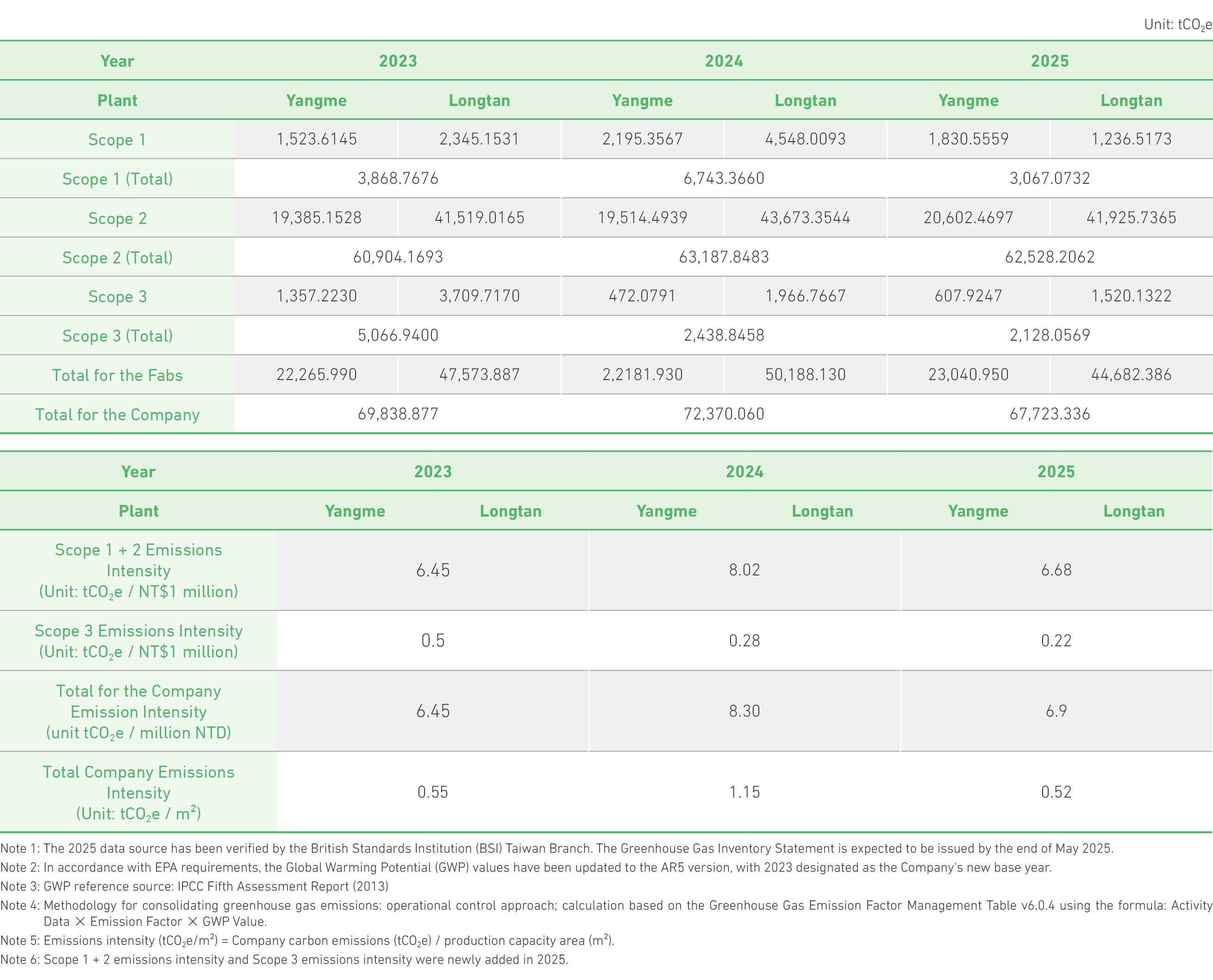
In 2025, Wafer Works' total greenhouse gas emissions (Scope 1 and Scope 2) amounted to 66,762.3762metric tons of carbon dioxide equivalent. The primary emissions came from Scope 2 purchased electricity, followed by process emissions, including perfluoropropane (C3 F8) and nitrous oxide (N2O). For the first time in 2022, Scope 3 emissions were included in the inventory, primarily focusing on other indirect emissions generated from outsourced activities, with emissions sources owned or controlled by other companies.
The Company has adopted a dual approach of "process decarbonization" and "energy-saving measures," successfully reducing the combined Scope 1 and Scope 2 greenhouse gas emissions by 5.2% compared with the previous year. Among these, Scope 1 achieved the most significant reduction performance through initiatives including nitrous oxide (N2O) process gas reduction and perfluorocarbon (PFCs) exhaust gas treatment, successfully achieving the annual carbon reduction target.
Wafer Works Carbon Reduction Goals
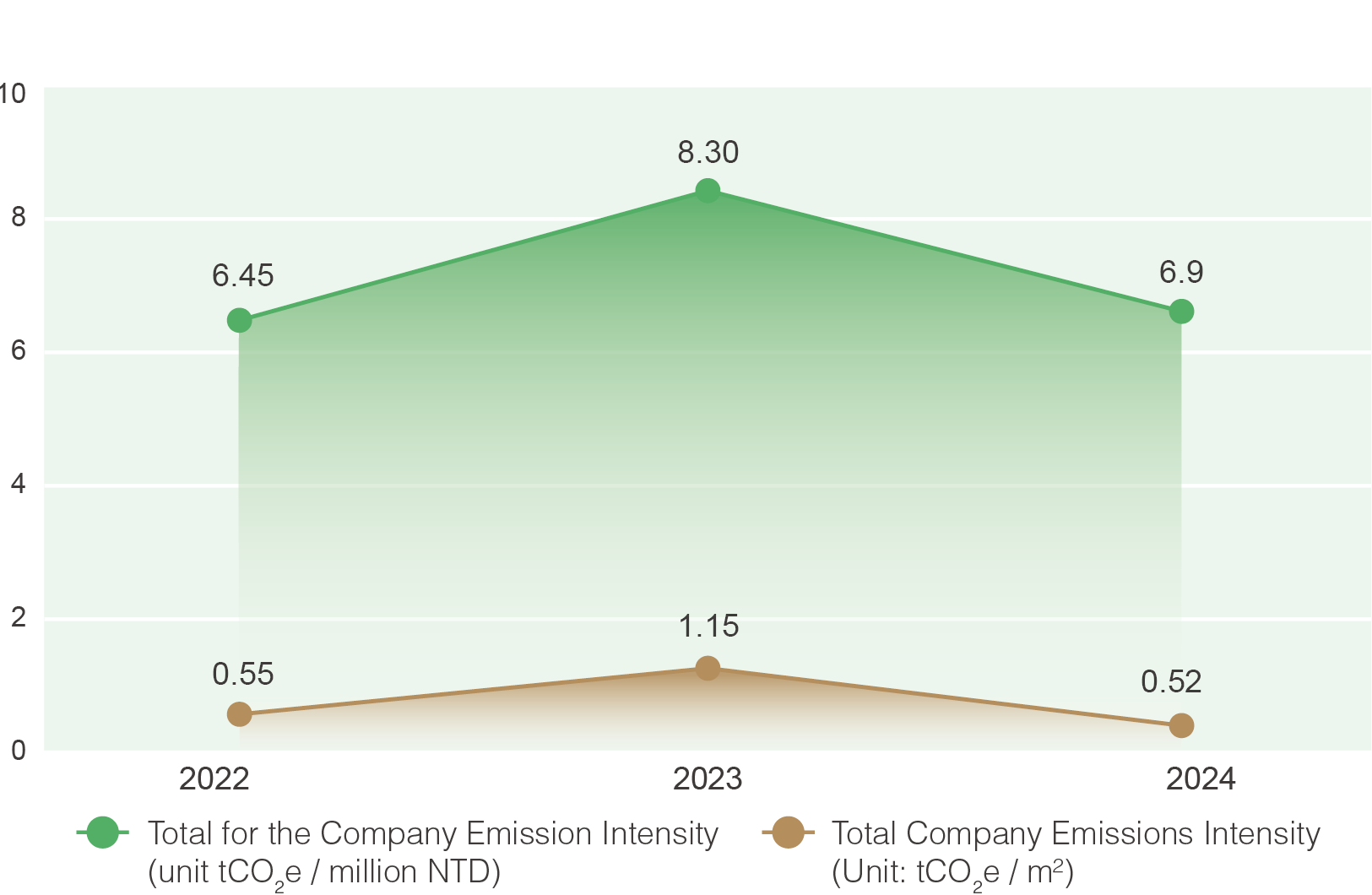
Total for the Company Emission Intensity
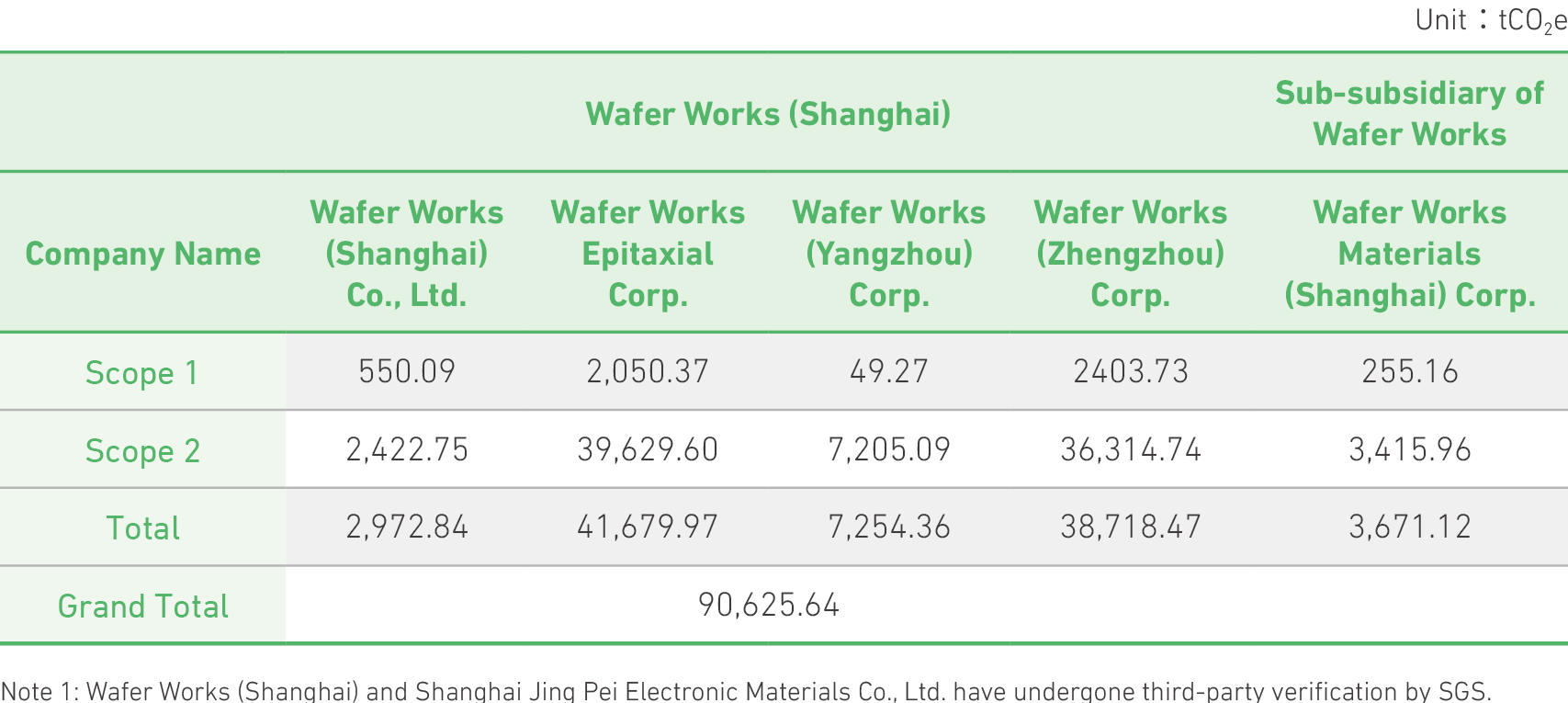
Regarding Group emissions, subsidiaries and sub-subsidiaries that completed external verification accounted for a total of 94,296.76 tCO2e, while self-inventory emissions from the remaining domestic and overseas sites totaled 101.65 tCO2e. For sites not currently included within the verification scope, the Company has planned to progressively achieve full-group verification targets in phases in accordance with the statutory timetable under the Financial Supervisory Commission "Sustainable Development Action Plans for TWSE- and TPEx-Listed Companies.
Pollution Prevention and Control and Management
Environment, Health and Safety Policy
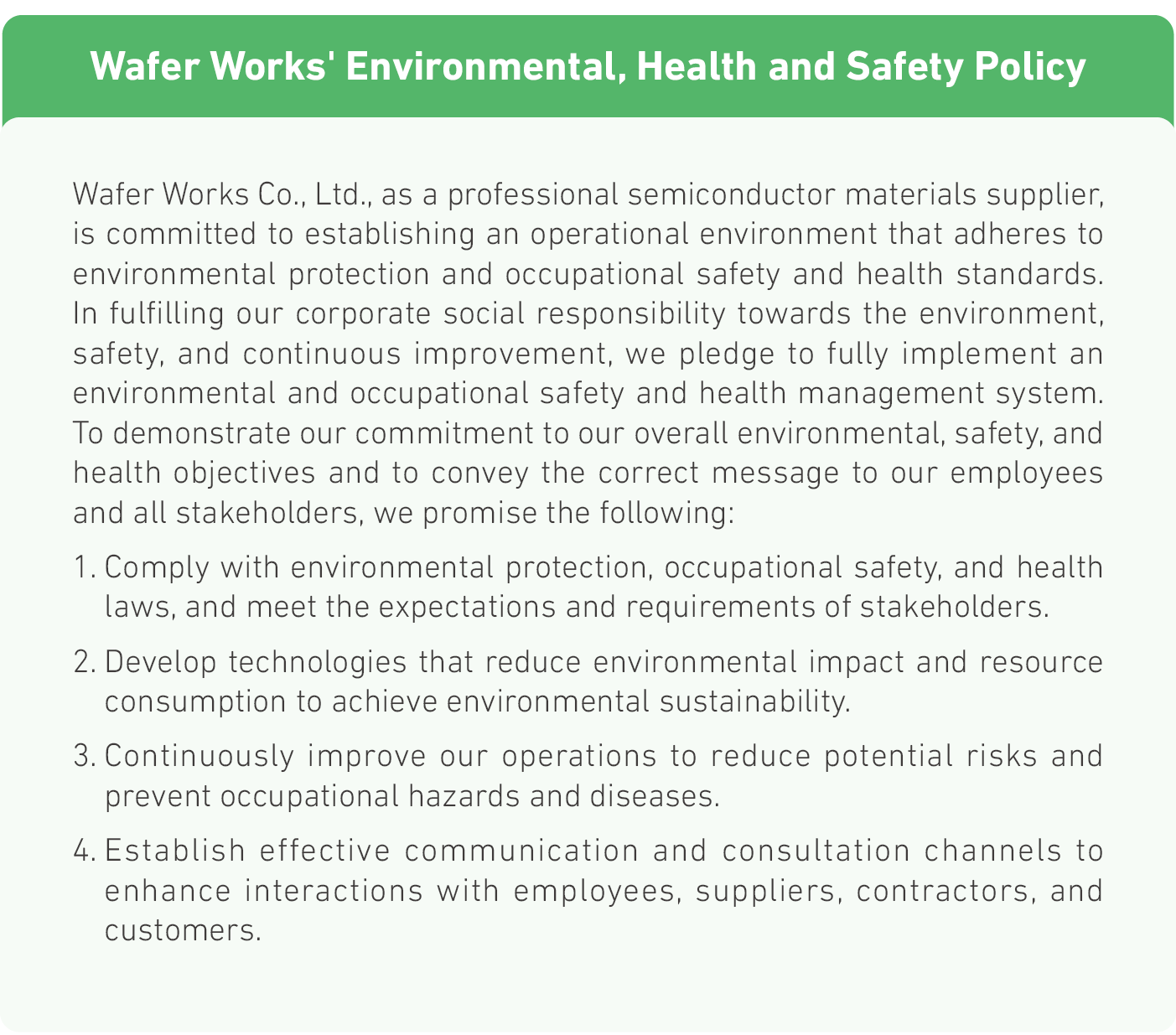
Wafer Works has established operation and maintenance procedures for air pollution control, water pollution prevention, and waste management. Relevant departments strictly adhere to these procedures to ensure all facilities operate at maximum efficiency. Various monitoring systems are installed at the discharge points of pollution control facilities. If monitoring values exceed alarm thresholds, operators will follow emergency response and notification procedures to address the issue immediately. Each year, we carry out emergency response drills for air and water pollution control and enhance internal environmental awareness to prevent environmental pollution and legal violations. Under this comprehensive pollution control monitoring and management system, Wafer Works did not contravene any environmental regulations from 2023 to 2025.
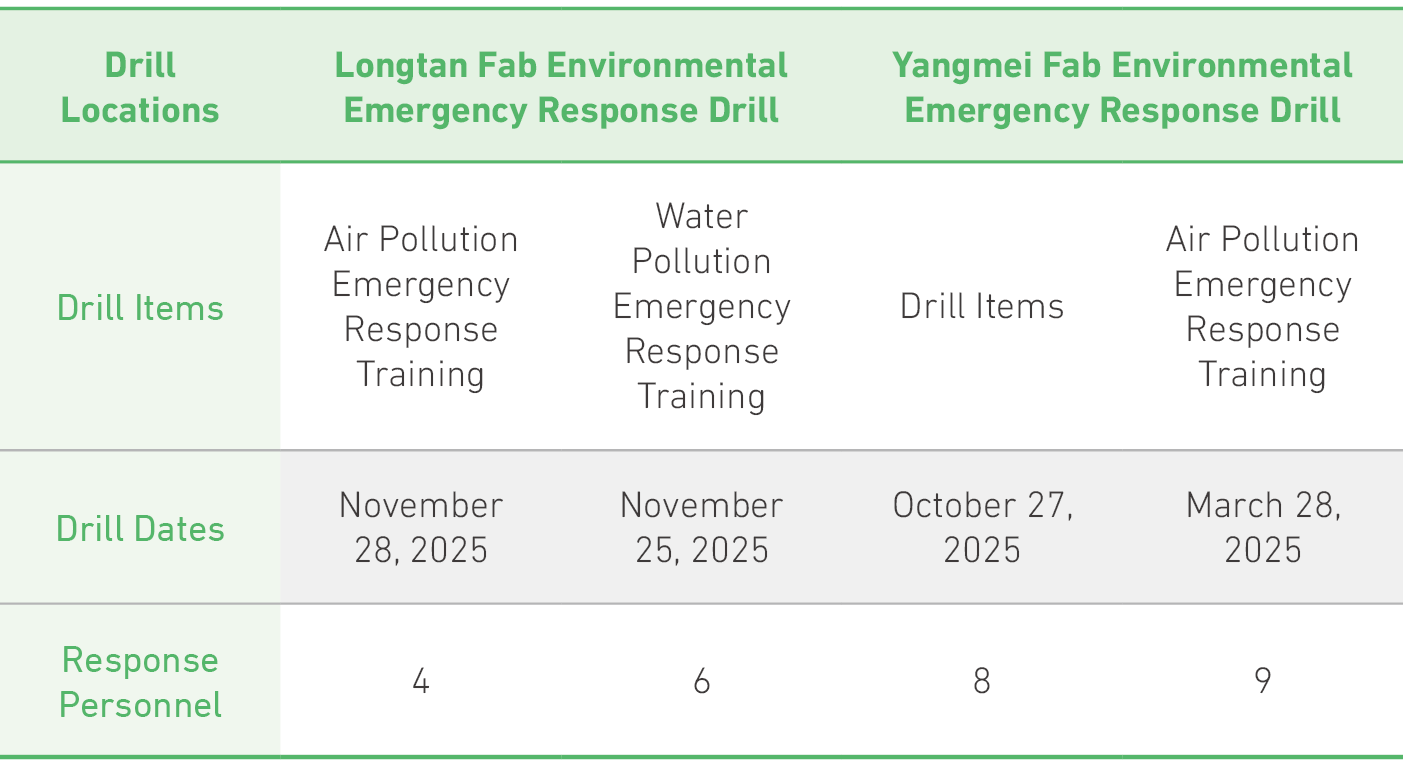
Air Pollution Control
Wafer Works' strategy for air pollution control starts by optimizing processes to minimize the introduction of pollutants into exhaust gases. Subsequently, high-efficiency equipment is deployed to treat pollutants within the exhaust, guaranteeing compliance with government standards regarding the level of pollutants emitted into the atmosphere. Wafer Works classifies emissions into alkaline exhaust, acidic exhaust, and volatile organic compounds (VOCs). The air pollution control equipment varies based on the type of pollutants being treated, and all emissions comply with the regulations set by the Environmental Protection Administration. Wafer Works also prioritizes the rights of neighboring companies and community residents. All equipment operations are centrally monitored by staff on a 24-hour rotating schedule. Continuous monitoring devices are installed to track VOC emission concentrations. Any variations in operating conditions are under constant monitoring, and if they deviate beyond the preset limits, an immediate alert is sent out.
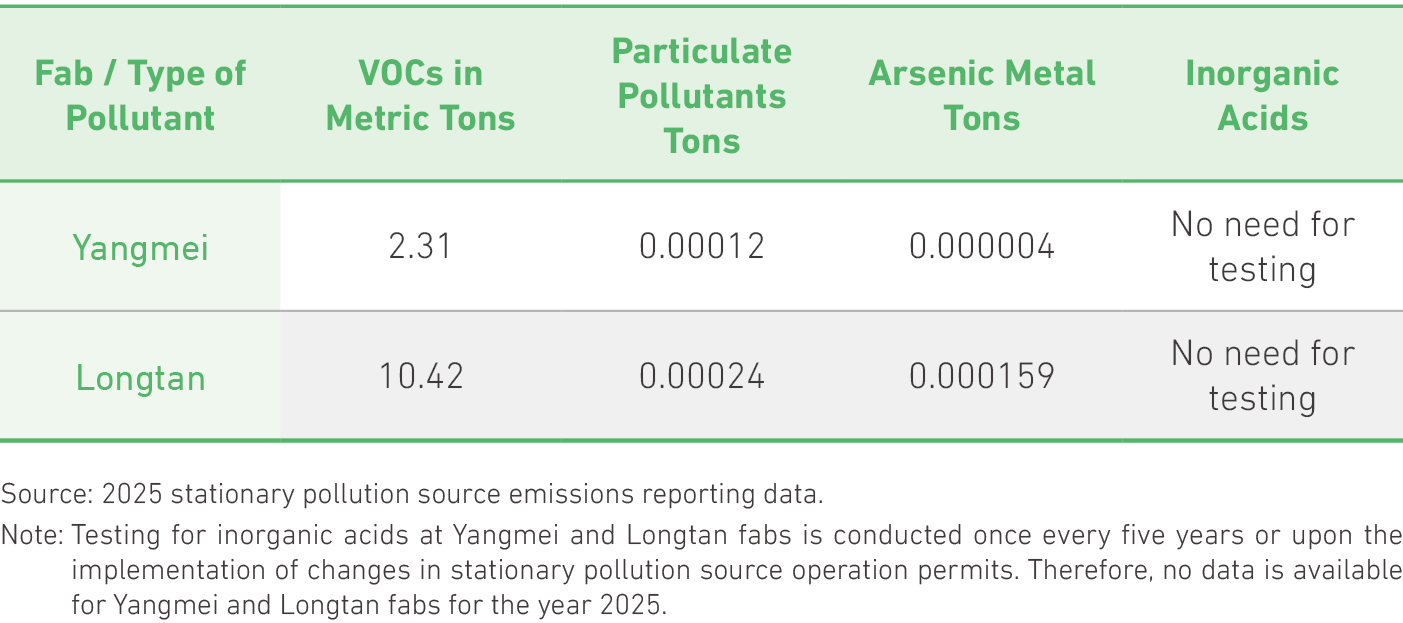
Circular Economy and Waste Management
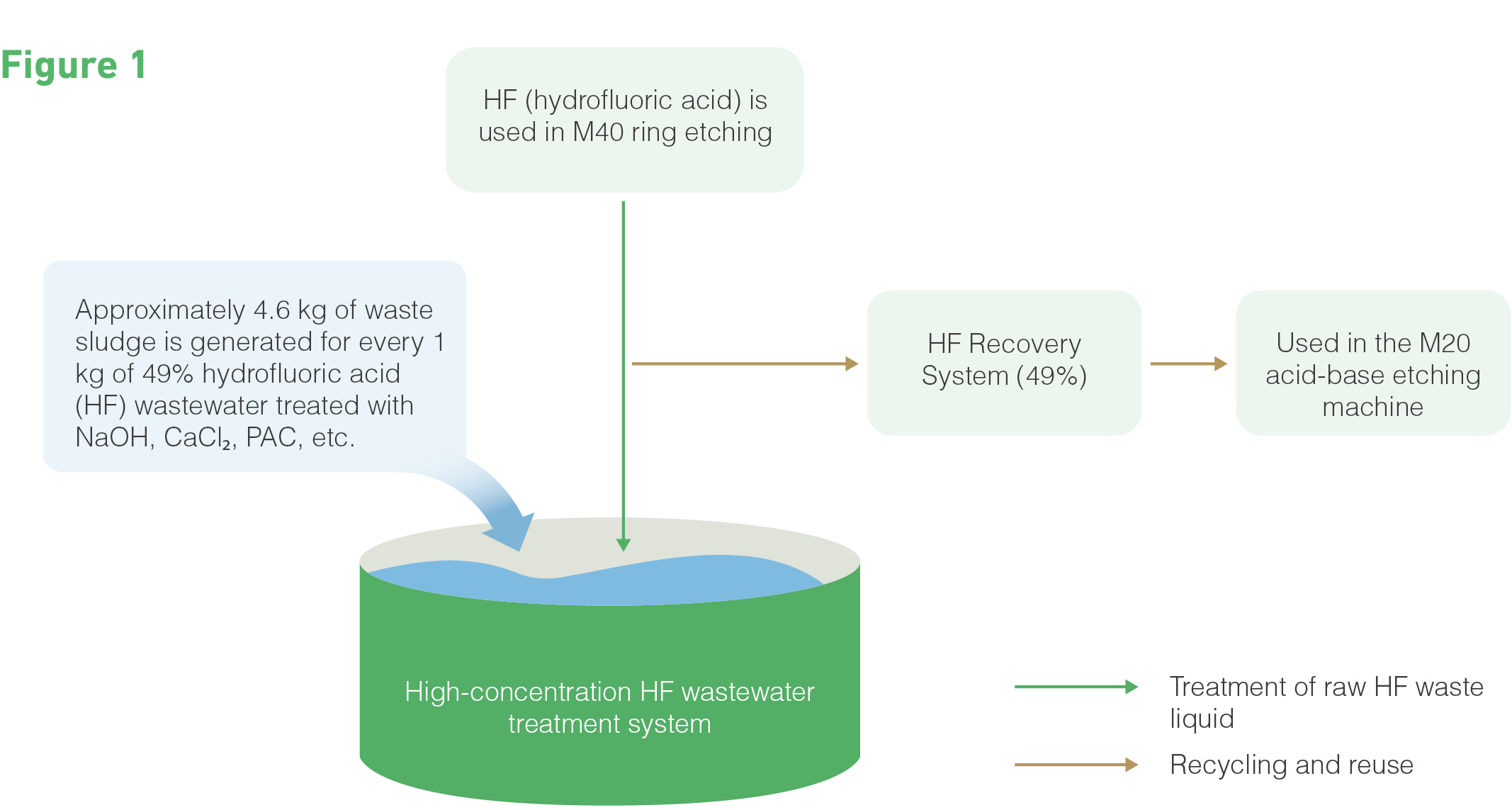
Wafer Works adheres to a circular economy and resource reutilization model, focusing on waste reduction at the source and circular economy practices. Through circular economy initiatives (waste acid reutilization) and optimization of its waste acid recovery system, the Company implemented a hydrofluoric acid (HF) recycling and reuse project in 2025. Under this project, hydrofluoric acid used in surface treatment etching equipment was recovered and reused in acid and alkaline etching equipment for the forming process, thereby achieving waste reduction and carbon reduction benefits. In 2025, the recovery volume reached 9,171 liters, reducing costs by approximately NT$1,167,861 (including chemical agents, sludge treatment expenses, raw material costs, etc.), while reducing carbon emissions associated with HF production by 36.134 tCO2e (the carbon footprint of hydrofluoric acid products is 3.94 kgCO2e, source: Product Carbon Footprint Information Platform). (Figure 1)
The reuse of broken wafer materials accounted for 6.5% of total production capacity, while the reutilization of crystal ingot head/ tail materials and bottom materials accounted for 14.5% of total input materials. In 2025, the Company continued to maintain the operational effectiveness of these initiatives, contributing continuously to waste reduction and recycling efforts.
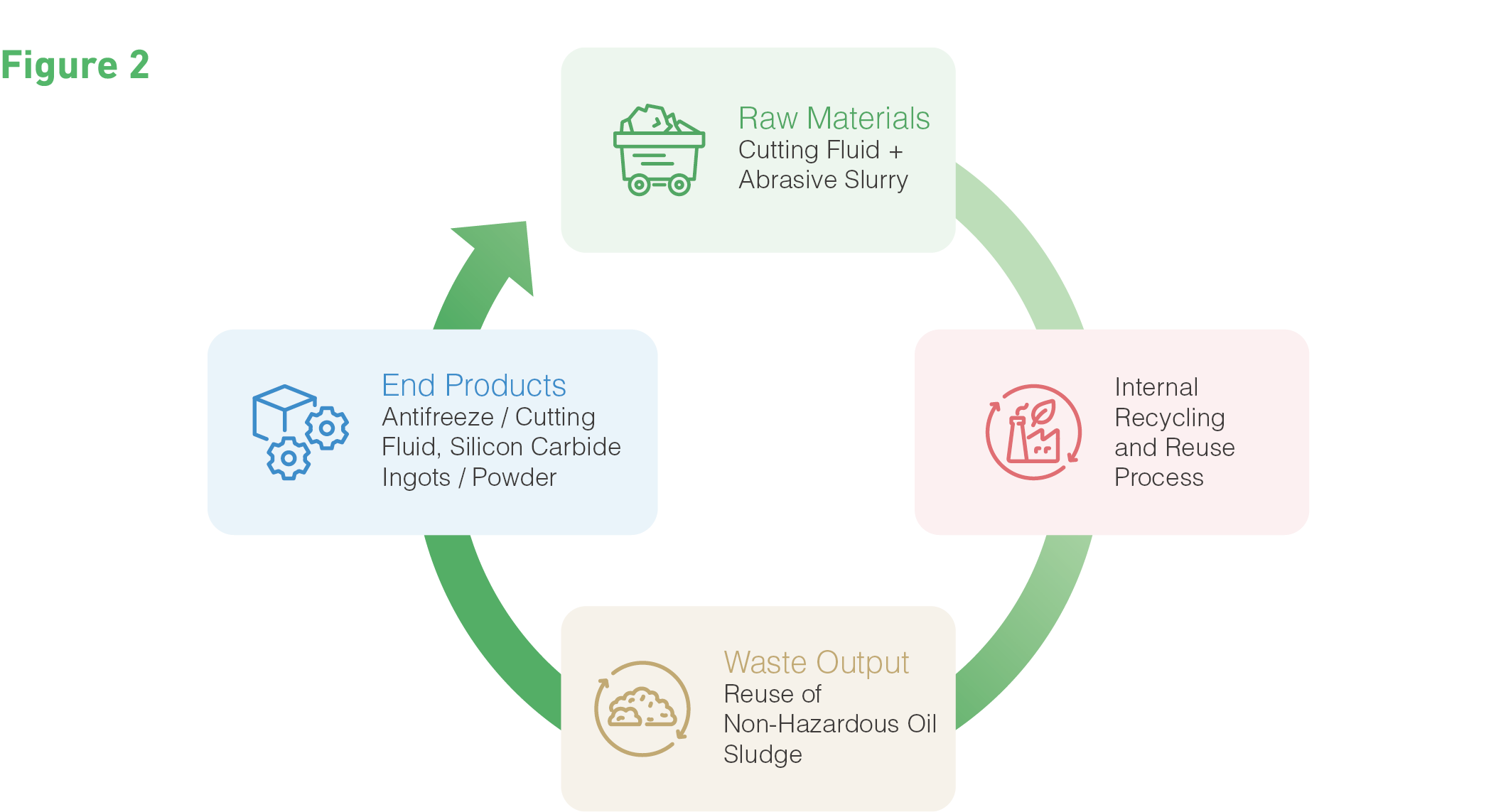
Wafer Works has established comprehensive waste treatment and recycling mechanisms. The Company strictly manages waste classification, and personnel are stationed in waste storage areas to inspect and organize waste disposal activities. From new employees to current staff members, all personnel regularly receive waste classification awareness training. The Company implements strict controls from source management to end-stage waste disposal classification, thereby reducing carbon emissions caused by incineration. As part of its circular economy initiatives for waste reduction at the source, the Company has established a cutting oil recycling and reuse system. In the forming and slicing process, two methods are used for wafer slicing: The first method utilizes steel-wire cutting machines, which require process materials consisting of cutting oil and abrasive powder. The wire-cutting machine uses the lubrication of cutting oil and the friction generated by the edges of abrasive powder to slice silicon ingots into silicon wafers. The waste generated from this process consists of non-hazardous oily sludge. However, because the abrasive powder edges still meet process specifications after each cutting cycle, the Company applies centrifugal differential separation principles to filter out materials that do not meet specifications. After adding new materials and reblending, the materials are recycled back into the production line for reuse. The discarded slurry, categorized as non-hazardous oily sludge, is entrusted to qualified recycling facilities for conversion into silicon carbide ingots and silicon carbide powder, which can be used by steel plants as heating agents or by refractory material manufacturers. The cutting oil can also be distilled based on boiling point principles and repurposed as antifreeze agents for high-latitude countries. (Figure 2) The second method utilizes diamond wire cutting machines, which only require coolant for cutting operations. As a result, this method reduces both raw material usage and waste generation. The Company is progressively replacing its cutting machines with diamond wire cutting machines. Upon full replacement, the Company is expected to save 301.49 metric tons of cutting oil and abrasive powder annually, while reducing non-hazardous oily sludge waste generation by 534.43 metric tons. The Longtan Plant has currently completed approximately 60% of the replacement process and continues to proceed with upgrades, while the Yangmei Plant has completed full replacement.
Empty chemical drums (acidic and alkaline) are typically classified as hazardous waste and require incineration. However, the Company works with qualified recycling vendors to clean, crush, and process these drums into non-hazardous plastic pellets for industrial use, promoting circular reuse.
Reusable industrial waste includes sludge, oil sludge, chemical drums, quartz crucibles, graphite crucibles, blue protective films, pallets, and other materials recyclable waste materials such as paper, PET bottles, iron, aluminum cans, recyclable plastics, styrofoam, and metal scraps are sorted and collected, then handed over to certified local waste treatment companies. Nonrecyclable waste is disposed of as general waste by certified waste removal vendors and transported to government-designated incineration facilities.
Wafer Works classifies its waste according to treatment methods into three categories: recyclable industrial waste, incinerated general industrial waste, and reusable general industrial waste.
The waste output for each category from 2023 to 2025 is summarized in the table below:
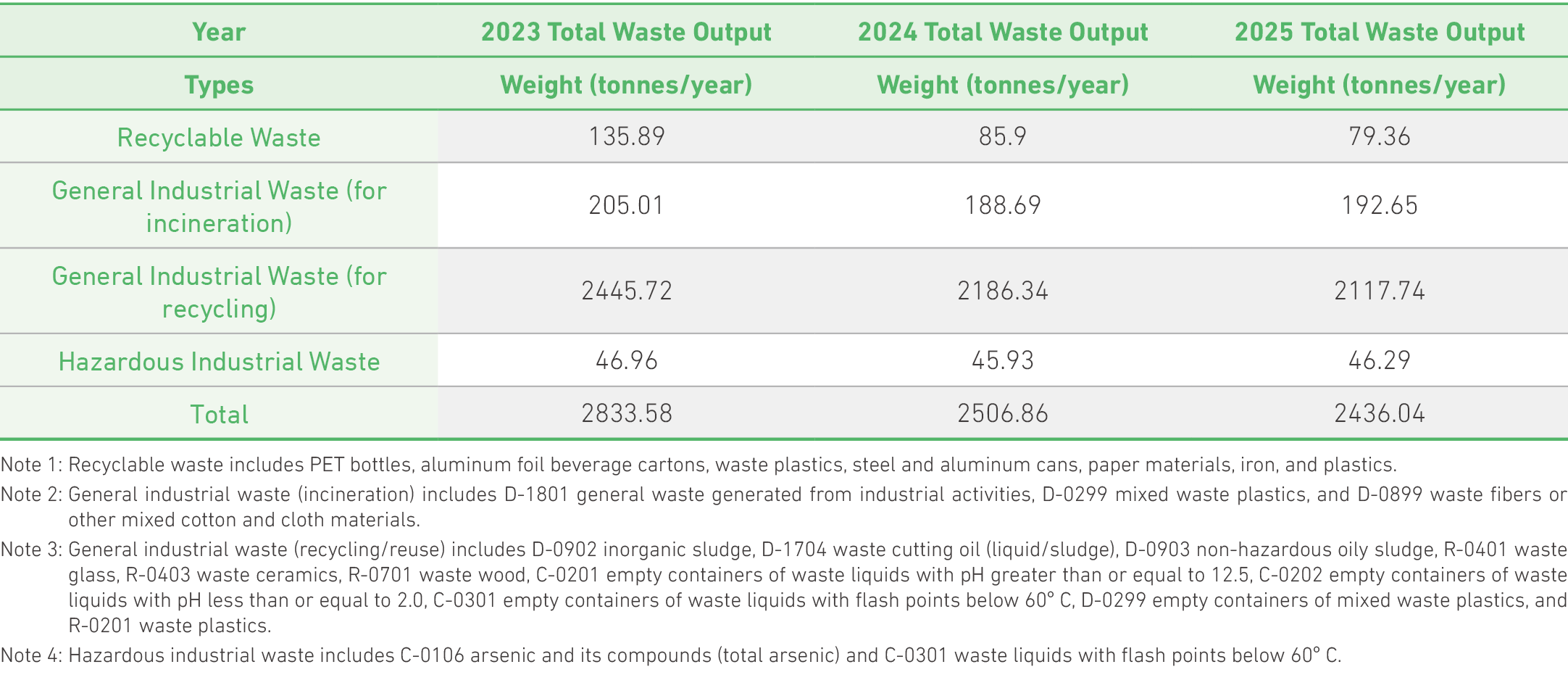
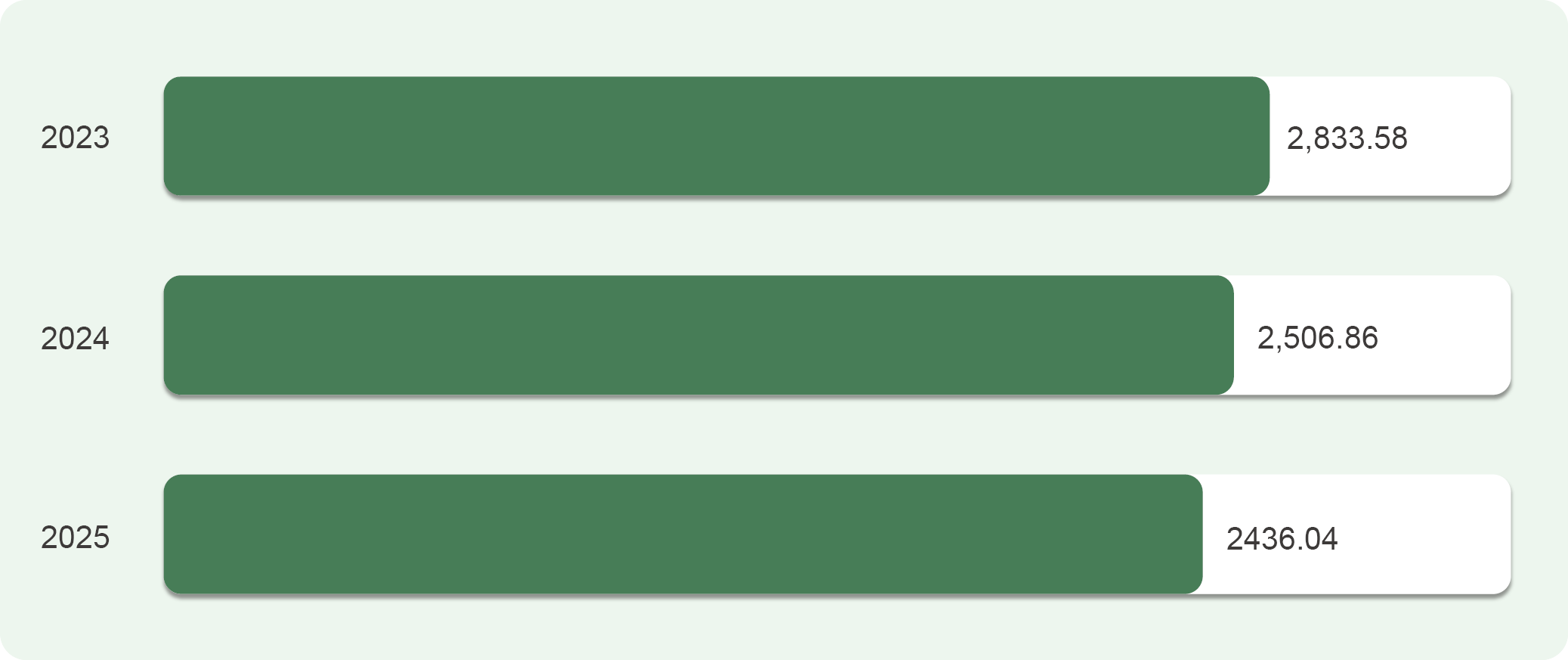
Wafer Works produces several types of industrial waste: general industrial waste, hazardous industrial waste, empty chemical containers, and recyclable waste. All waste is stored and transported according to legal regulations.
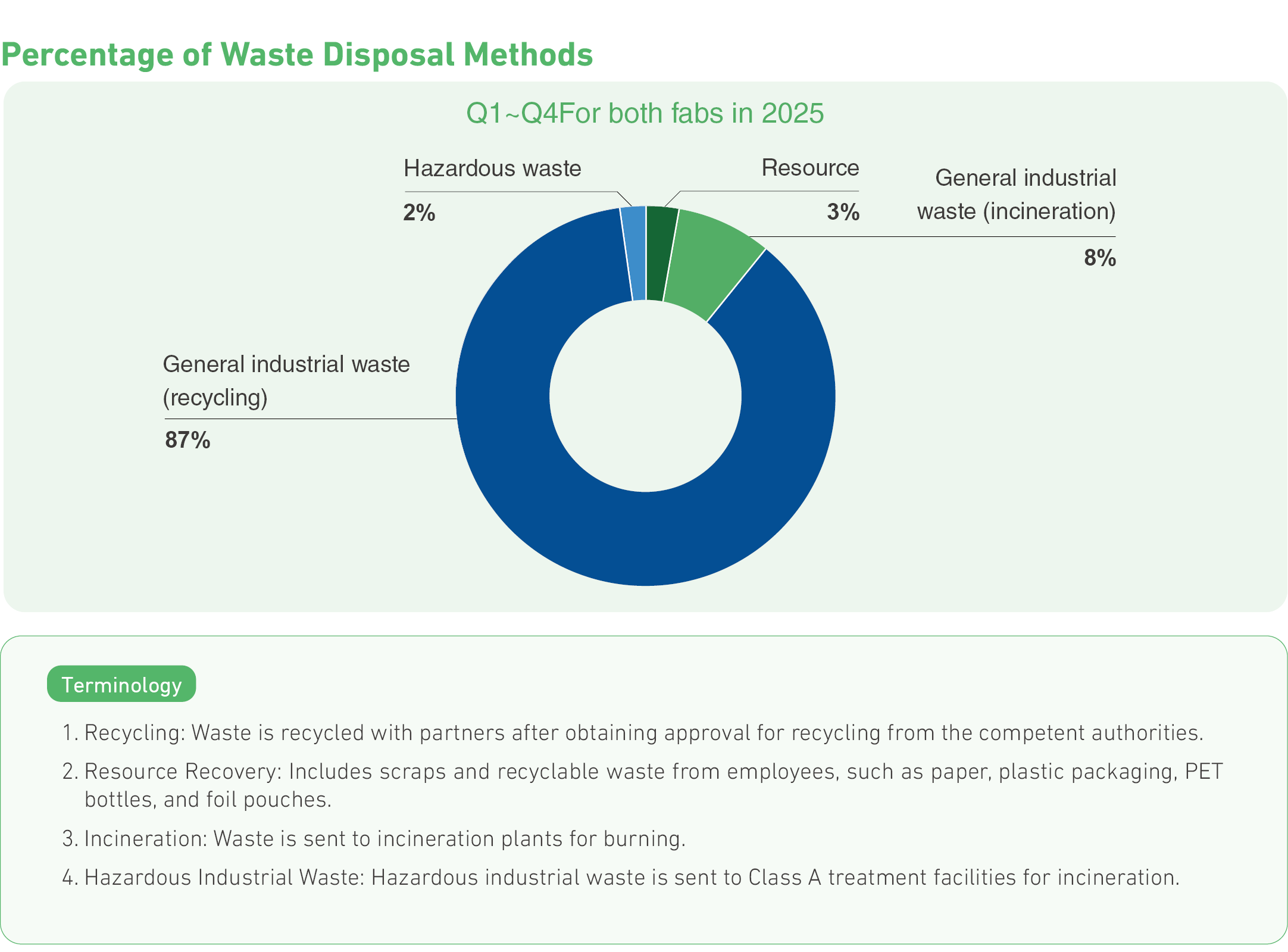
The methods for disposing of industrial waste at Wafer Works are as follows: 87% recycling, 8% incineration, and 2% resource recovery. Please refer to the waste disposal method distribution chart for detailed information. Wafer Works focuses on reducing pollution and managing waste through recycling initiatives. The primary source of hazardous industrial waste is empty chemical containers that contain chemical materials during the manufacturing process. These containers undergo regular annual audits, and each waste shipment is tracked with manifests to collect and monitor related data. The 86% recycling rate includes both general and hazardous industrial waste. In 2023, Wafer Works managed hazardous industrial waste, including empty chemical barrels, through a partnership with recycling processors. The process involves cleaning, neutralization, testing, certification, shredding, and recycling the plastic, with approval from regulatory authorities.